Attachment in Adults: Signs, Types, and How It Shapes Relationships
Attachment in adults is the way people tend to seek closeness, safety, space, and reassurance in important relationships. It is not a fixed personality label or a clinical assessment. It is a practical lens for noticing what happens when intimacy feels exciting, uncertain, or threatened. If you are trying to understand repeated relationship patterns, a private attachment style quiz can be a gentle starting point for reflection, especially when you pair the result with real-life examples rather than treating it as a verdict.
Adult attachment theory can help explain why one person reaches for reassurance during conflict while another shuts down, changes the subject, or needs time alone. The goal is not to blame childhood, blame a partner, or put yourself in a box. The goal is to notice patterns early enough to choose calmer, clearer responses.

What Adult Attachment Theory Means
Adult attachment theory grew from the idea that close bonds help people regulate safety and stress. In adulthood, the most visible attachment patterns often appear in romantic relationships, close friendships, and other emotionally important bonds. When a relationship feels safe enough, many people can explore, disagree, repair, and ask for support without feeling that the whole connection is at risk.
When attachment insecurity is activated, the nervous system may read ordinary distance, disagreement, or uncertainty as danger. That is why attachment styles in adult relationships are often easiest to see during stress. A delayed text, a serious conversation, a partner asking for space, or a moment of vulnerability can all bring old strategies to the surface.
Researchers often describe adult attachment through two broad dimensions: attachment anxiety and attachment avoidance. Attachment anxiety is linked with fears of rejection, abandonment, or not being valued. Attachment avoidance is linked with discomfort around dependence, emotional exposure, or feeling relied upon. The familiar attachment types in adults are a simple way of describing different combinations of those dimensions.
The Four Main Attachment Types in Adults
Most people do not fit one style perfectly in every relationship. You may feel steady with close friends, anxious in dating, avoidant with family, or more disorganized when trust has been damaged. Still, the four-style framework is useful because it gives language to patterns that can otherwise feel confusing.
Security-Based Attachment in Adults
The security-based attachment pattern in adults usually shows up as comfort with closeness and comfort with independence. A person with this pattern can ask for support, offer support, set boundaries, and repair conflict without assuming that every disagreement means rejection.
Signs of a safety-oriented attachment pattern in adults may include:
- expressing needs without intense shame
- listening without immediately defending
- respecting space without reading it as abandonment
- accepting care without feeling trapped
- taking responsibility after conflict
This attachment pattern does not mean perfect communication or constant calm. It means the relationship can usually return to safety after stress.
Anxious Attachment in Adults
Anxious attachment in adults often centers on uncertainty about being loved, chosen, or prioritized. Someone with this pattern may crave closeness but feel unsettled by small signs of distance. They may seek reassurance, replay conversations, or become highly alert to changes in tone.
Common signs include:
- feeling distressed when replies are delayed
- needing frequent reassurance that the relationship is okay
- fearing that normal space means rejection
- over-apologizing to keep closeness
- escalating conflict when feeling ignored
At its core, anxious attachment is often an attempt to restore connection. The strategy can make sense emotionally, even when it creates pressure in the relationship.
Avoidant Attachment in Adults
Avoidant attachment in adults often centers on protecting independence. Someone with this pattern may value connection but become uncomfortable when a relationship asks for more emotional openness, shared decision-making, or vulnerability.
Common signs include:
- pulling back when conversations become emotionally intense
- feeling crowded by reasonable needs
- preferring to solve distress alone
- minimizing the importance of closeness
- leaving conflict unresolved to regain control
Avoidant attachment is not the same as not caring. Often, distance is a strategy for staying regulated when closeness feels too demanding or exposing.
Disorganized Attachment in Adults
Disorganized attachment in adults, sometimes described as fearful avoidant attachment, can involve both longing for closeness and fear of being hurt by it. A person may move toward connection, then suddenly distrust it, withdraw from it, or test it.
Common signs include:
- wanting intimacy but feeling unsafe once it arrives
- switching between pursuit and withdrawal
- expecting rejection even during caring moments
- feeling confused by personal reactions in close relationships
- struggling to calm the body during conflict
This pattern can be especially tender. If attachment trauma in adults, past abuse, or intense relationship fear is part of the picture, professional support can be important. Educational self-reflection can help with language and awareness, but it should not replace care from a qualified mental health professional when distress is severe or safety is involved.

Signs of Attachment Issues in Adult Relationships
Attachment issues in adults are usually less about one dramatic moment and more about repeated cycles. The question is not "What label am I?" but "What happens in me when closeness feels uncertain?"
Look for patterns such as:
- conflict quickly feeling like rejection, control, or abandonment
- difficulty asking for needs directly
- choosing partners who repeat a familiar emotional pattern
- feeling either too dependent or too detached
- struggling to believe reassurance even when it is offered
- using protest, silence, over-explaining, or withdrawal to feel safer
- feeling ashamed after reacting strongly
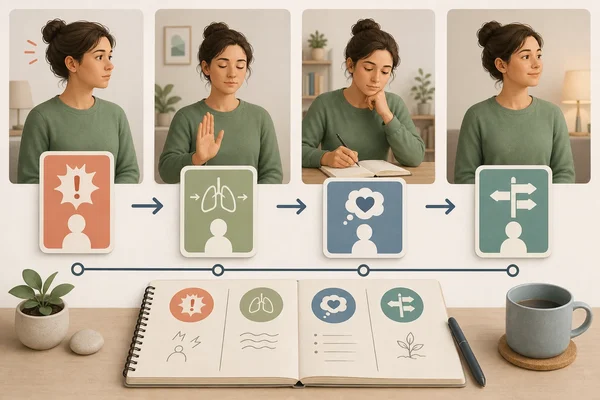
A useful reflection is to separate trigger, story, feeling, and response. The trigger might be a partner needing a quiet evening. The story might be "I am not important" or "I am being trapped." The feeling might be panic, anger, numbness, or shame. The response might be texting repeatedly, withdrawing, criticizing, or pretending not to care.
This four-part map keeps attachment style in adults practical. It turns a vague label into something observable.
How Attachment Shapes Adult Romantic Relationships
Attachment theory in adult romantic relationships matters because love does not happen only in calm moments. It also happens in repair, conflict, waiting, disappointment, and dependence.
In a safety-based cycle, one person can say, "I felt hurt when plans changed," and the other can respond without treating the concern as an attack. In an anxious cycle, the same changed plan may feel like proof that the relationship is slipping away. In an avoidant cycle, the same conversation may feel like pressure, criticism, or loss of freedom. In a disorganized cycle, the person may want comfort and distrust comfort at the same time.
These patterns often reinforce each other. An anxious partner may pursue harder when an avoidant partner withdraws. The avoidant partner may withdraw more when pursuit feels intense. Both may be trying to feel safe, but their strategies can accidentally create the exact distance or pressure they fear.
This is why adult attachment style work is most helpful when it focuses on the cycle, not just the person. A gentle attachment style quiz can give you vocabulary, but the deeper work is noticing how your pattern interacts with someone else's pattern in real time.
Can Attachment Patterns Change in Adulthood?
Attachment patterns can become steadier and safer over time, especially when people have consistent experiences of honesty, care, boundaries, and repair. Change is usually gradual. It often comes from repeated moments where the body learns, "I can ask directly," "I can pause before reacting," or "Closeness does not have to erase my independence."
Helpful growth steps include:
- naming the attachment strategy without shaming it
- practicing direct requests instead of protest or withdrawal
- slowing down conflict before the nervous system takes over
- choosing relationships where consistency is possible
- building emotional regulation skills outside the relationship
- working with a therapist or counselor when patterns feel overwhelming
Books, articles, and reflection tools can support this process, but they work best when they lead to small behavioral experiments. For example, an anxious pattern might practice sending one clear message and then waiting. An avoidant pattern might practice staying present for one difficult feeling before taking space. A disorganized pattern might practice grounding before deciding whether to move closer or step back.

A Simple Reflection Map for Your Next Relationship Pattern
The next time an attachment response shows up, try writing down five short lines:
- Situation: What happened without interpretation?
- Body: What did I notice in my body?
- Story: What did my mind say this meant?
- Strategy: Did I pursue, withdraw, freeze, please, criticize, or over-explain?
- Safer next step: What would be one calm, honest response?
This exercise is not about forcing yourself to be perfectly calm instantly. It is about creating a pause between the old strategy and the next choice. Over time, that pause can become the place where new relationship skills grow.
If you want a private way to compare your reflections with a structured framework, you can use a relationship self-reflection quiz as one input. Keep the result in perspective: it is a mirror for learning, not a final answer about who you are.
FAQ
What is the adult attachment theory?
Adult attachment theory is a framework for understanding how people seek closeness, support, independence, and safety in emotionally important adult relationships. It suggests that early experiences may influence later expectations, but adult relationships, self-awareness, and new experiences can also shape how attachment patterns develop.
What are the four attachment styles in adults?
The four common attachment styles in adults are the security-based style, anxious, avoidant, and disorganized. The security-based style is linked with comfort in closeness and independence. Anxious attachment often involves fear of rejection. Avoidant attachment often involves discomfort with dependence. Disorganized attachment can involve both desire for closeness and fear of it.
What are signs of attachment issues in adults?
Signs of attachment issues in adults can include intense fear of abandonment, difficulty trusting closeness, pulling away during emotional conversations, needing repeated reassurance, feeling trapped by normal intimacy, or swinging between pursuit and withdrawal. These signs are best understood as patterns to reflect on, not as proof of a condition.
Is attachment disorder in adults the same as an attachment style?
No. An attachment style is a broad self-reflection framework often used to understand relationship patterns. Clinical terms related to attachment disorders are different and require professional evaluation. If your distress is severe, linked with trauma, or affecting safety, it is wise to speak with a qualified mental health professional.
How can adults develop safer attachment patterns?
Adults can build safer patterns by practicing emotional awareness, direct communication, healthy boundaries, conflict repair, and consistent relationships. Therapy can also help, especially when past trauma or intense distress is involved. The aim is gradual growth, not a perfect attachment label.
Can your attachment style be different with different people?
Yes. Many people feel safer in some relationships and less safe in others. Context, trust, past experiences, stress, and the other person's pattern can all influence how attachment shows up. That is one reason attachment is often better treated as a pattern map than a permanent identity.