Attachment Issues: What They Mean, How They Show Up, and What You Can Do
Do you ever feel like your relationships follow the same exhausting script? Maybe you pull away the moment someone gets close — or you hold on so tightly that it pushes people further away. These patterns often point to something deeper: attachment issues. Shaped by how you learned to connect in childhood, your attachment patterns quietly influence the way you love, argue, and trust throughout your entire life. In this guide, you will learn what attachment issues actually mean, how to spot the signs in yourself, and what steps you can take to start building healthier bonds. If you are ready to start exploring your own patterns, an attachment style quiz can be a helpful first step.

What Are Attachment Issues — and Why Do They Matter?
Attachment issues refer to patterns of thinking, feeling, and behaving in relationships that stem from early emotional bonds with caregivers. When those early bonds were inconsistent, distant, or unpredictable, you may develop tendencies that make close relationships feel difficult or confusing as an adult.
These patterns are not character flaws. They are learned responses — and once you understand them, you can start to change them.
A Simple Explanation of Attachment Theory
Attachment theory was first developed by psychologist John Bowlby and later expanded by Mary Ainsworth. The core idea is straightforward: the quality of your earliest emotional bonds shapes how you relate to others for the rest of your life.
When a child's needs are met consistently, they generally develop secure attachment — a sense that relationships are safe and reliable. However, when care is unpredictable, neglectful, or frightening, the child may develop insecure attachment patterns that carry into adulthood.
Attachment Issues vs. Attachment Disorders — What Is the Difference?
This distinction matters. Attachment issues is a broad, informal term describing difficulties with emotional closeness and trust. Most people who say they have "attachment issues" are describing insecure attachment patterns — not a clinical diagnosis.
Attachment disorders, on the other hand, are specific diagnoses recognized in the DSM-5. These include Reactive Attachment Disorder (RAD) and Disinhibited Social Engagement Disorder (DSED), which are primarily diagnosed in children who experienced severe neglect or trauma. If you suspect a clinical-level concern, speaking with a licensed mental health professional is the best path forward.
Common Signs of Attachment Issues in Adults
Recognizing attachment issues starts with honest self-reflection. The signs are not always dramatic — they often show up as subtle but persistent patterns in how you handle closeness, conflict, and vulnerability in relationships.
Emotional Signs You Might Notice
- Feeling anxious or insecure when a partner does not respond quickly
- A deep fear of abandonment, even when there is no real threat
- Difficulty trusting others, even people who have earned your trust
- Emotional numbness or shutting down during conflict
- A persistent sense that you are "too much" or "not enough" for others
Behavioral Patterns in Relationships
- Quickly forming intense bonds and then pulling away
- Avoiding deep conversations about feelings or the future
- People-pleasing to avoid rejection
- Picking fights or creating distance when things feel too close
- Staying in unhealthy relationships because leaving feels unbearable
How Avoidant and Anxious Signs Differ
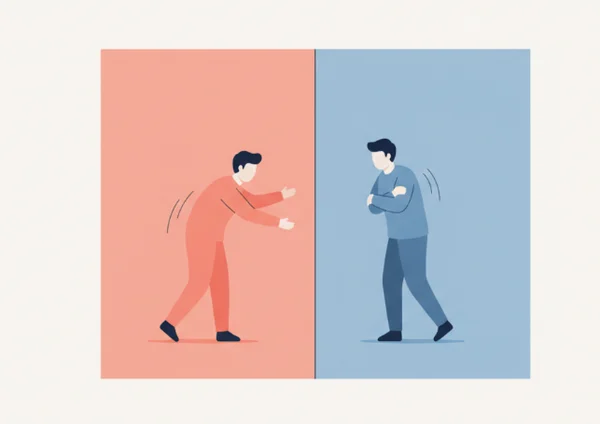
Anxious attachment issues often look like constant reassurance-seeking, overthinking texts, and difficulty being alone. You may feel clingy or overly dependent on a partner's validation.
Avoidant attachment issues tend to look like emotional withdrawal, discomfort with vulnerability, and a strong preference for independence. You might shut down when a partner expresses emotional needs.
In many couples, one person leans anxious while the other leans avoidant — creating a push-pull cycle that feels impossible to break.
How the 4 Attachment Styles Shape Your Relationships
Understanding the four attachment styles helps you see your own tendencies more clearly. Keep in mind that these are patterns on a spectrum — not rigid boxes or diagnoses.
Secure Attachment — The Foundation of Healthy Bonds
If you have a secure attachment style, you generally feel comfortable with closeness and independence. You communicate your needs openly and trust that your partner will be there for you. Secure attachment is the result of consistent, responsive caregiving in childhood.
This does not mean secure people never struggle in relationships. However, they tend to recover from conflict more easily and maintain healthy boundaries.
Anxious Attachment — When Closeness Feels Never Enough
People with anxious attachment often crave deep closeness but worry constantly about being abandoned. You might overthink your partner's words, feel devastated by short silences, or need frequent reassurance that everything is okay.
In a relationship, this might look like: checking your phone repeatedly for replies, reading into small changes in tone, or feeling panicked when plans change unexpectedly.
Avoidant Attachment — When Independence Becomes a Shield
Avoidant attachment shows up as a strong pull toward self-reliance. You may have learned early on that depending on others leads to disappointment. As a result, you might keep emotional distance, avoid deep conversations, or feel uncomfortable when a partner wants more closeness.
In a relationship, this might look like: changing the subject during serious talks, needing a lot of alone time, or feeling suffocated by a partner's emotional needs.
Disorganized Attachment — Caught Between Wanting and Fearing Closeness
Disorganized attachment, sometimes called fearful-avoidant, involves contradictory impulses. You may desperately want closeness but also feel terrified of it. This style often develops when a caregiver was both a source of comfort and a source of fear.
In a relationship, this might look like: swinging between intense affection and sudden withdrawal, difficulty regulating emotions during conflict, or sabotaging relationships that start to feel real.
What Causes Attachment Issues — and Why Childhood Matters
Attachment issues do not appear out of nowhere. They usually have roots in your earliest relationships — even if you had a childhood that seemed "normal" on the surface.
How Early Caregiving Shapes Your Attachment Blueprint
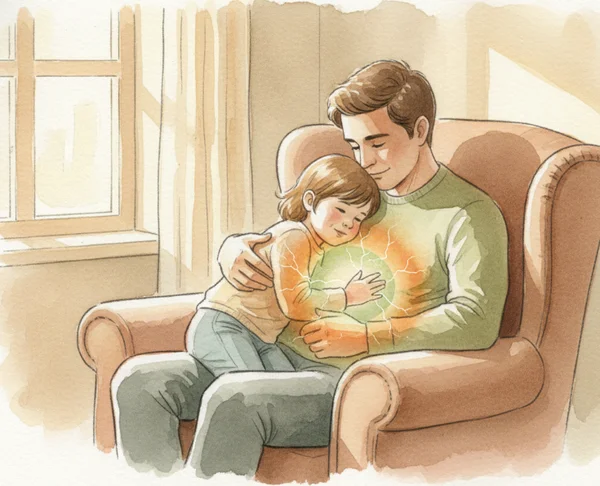
Your brain built its attachment blueprint during the first few years of life. If your caregivers were warm, consistent, and responsive, you likely developed a sense that relationships are safe. However, if care was unpredictable, emotionally absent, or frightening, your nervous system may have learned that closeness is risky.
Common childhood experiences linked to attachment issues include:
- A caregiver who was emotionally unavailable or depressed
- Frequent changes in caregivers or living situations
- Physical or emotional neglect
- A parent who was loving on some days and dismissive on others
- Exposure to domestic conflict or instability
Can Attachment Issues Form Even in Stable Families?
Yes. Attachment issues do not require obvious trauma. Sometimes, subtle emotional misattunement — a caregiver who provided material comfort but rarely acknowledged emotions — can be enough to shape insecure patterns. A parent may have been physically present but emotionally disconnected.
This is not about blame. Understanding your origins helps you make sense of your patterns without defining yourself by them.
How Attachment Issues Affect Your Romantic Relationships
Attachment issues do not just stay in your head — they shape real interactions with the people closest to you. Romantic relationships, in particular, tend to activate attachment patterns because they involve vulnerability, dependence, and emotional exposure.
Common Conflict Cycles Driven by Attachment Patterns
Many couples get trapped in repeating cycles. For instance, one partner's fear of abandonment triggers them to seek reassurance. The other partner, who leans avoidant, feels overwhelmed and withdraws. This withdrawal then intensifies the first partner's anxiety — and the cycle continues.
These cycles are not about who is "right" or "wrong." They are about two nervous systems reacting to perceived threats in opposite ways.
Why the Same Problems Keep Coming Back
If you have ever wondered, "Why does this keep happening in every relationship?" — attachment patterns are often the answer. Without awareness, you may unconsciously choose partners who reinforce your existing blueprint. An anxiously attached person might be drawn to emotionally unavailable partners, while an avoidant person might feel most comfortable with someone who does not push for closeness.
Breaking this cycle starts with recognizing the pattern itself.
How to Start Healing From Attachment Issues
The good news is that attachment patterns are not permanent. Research suggests that people can shift toward more secure attachment over time with intentional effort. Here is where to start.
Build Awareness of Your Patterns
Healing begins with recognition. Start by observing your reactions in relationships without judgment. When conflict arises, ask yourself:
- What am I actually afraid of right now?
- Is my reaction about the present situation, or something older?
- What do I need but find hard to ask for?
Journaling these observations can help you identify your default patterns. You can also explore your attachment patterns through a structured self-reflection quiz to organize your thoughts.
Therapy Approaches That Help With Attachment
Several evidence-based therapy approaches can support attachment healing:
- Emotionally Focused Therapy (EFT): Designed specifically for couples, EFT helps partners understand and reshape their emotional responses to each other.
- Cognitive Behavioral Therapy (CBT): Useful for identifying and challenging negative thought patterns related to relationships.
- Psychodynamic Therapy: Explores how past experiences shape current behaviors and relationship choices.
- Internal Family Systems (IFS): Helps you understand different "parts" of yourself that may carry attachment wounds.
A therapist who specializes in attachment can tailor the approach to your specific needs.
Daily Practices for Building Secure Connection
Small, consistent actions matter more than grand gestures. Try these practices:
- Practice naming your emotions — instead of shutting down or spiraling, pause and identify what you feel.
- Communicate needs directly — replace hints and tests with honest requests.
- Tolerate discomfort — if you tend to withdraw, practice staying present. If you tend to cling, practice self-soothing before reaching out.
- Seek out secure relationships — spending time with securely attached friends or a supportive partner can help rewire your expectations.
Explore Your Attachment Patterns — A Self-Reflection Starting Point
Understanding your attachment style is not about labeling yourself. It is about gaining insight into patterns that may have been running in the background for years.
Why Self-Reflection Is a Powerful First Step
Before working on change, you need clarity. Self-reflection helps you move from reacting on autopilot to understanding why certain situations trigger strong emotions. When you can name a pattern, you can begin to choose a different response.
What You Can Discover Through an Attachment Style Quiz
A well-designed attachment quiz can help you:
- Identify whether you tend toward anxious, avoidant, disorganized, or secure patterns
- See how your tendencies show up in specific relationship scenarios
- Gain language to describe your emotional needs more clearly
- Create a starting point for deeper exploration — whether on your own or with a therapist
This type of quiz is a self-reflection and educational tool. It is not a clinical assessment and does not replace professional evaluation.
If you are curious about where you fall, try our free attachment style quiz to start organizing your thoughts about your relationship patterns.

Taking the Next Step Toward Healthier Relationships
Attachment issues can feel deeply personal and sometimes overwhelming — but they do not have to define your future. The patterns you developed as a child were survival strategies, and they made sense at the time. Now, as an adult, you have the power to learn new ways of connecting.
Here are the key takeaways from this guide:
- Attachment issues are learned patterns, not personality flaws — and they can be changed.
- Recognizing your signs is the first and most important step toward healing.
- Understanding your attachment style gives you a framework for growth, not a label to carry.
- Professional support from a therapist experienced in attachment can accelerate progress.
- Small daily actions — naming emotions, communicating openly, tolerating discomfort — build secure attachment over time.
If you are unsure where you stand, taking a few minutes to reflect on your patterns can make a meaningful difference. You do not need to have all the answers right now. You just need to be willing to look.
Frequently Asked Questions
Can attachment issues be healed or changed over time?
Yes. Research in developmental psychology supports the idea that attachment patterns can shift toward security through self-awareness, therapy, and supportive relationships. Change takes time and consistent effort, but it is absolutely possible.
What is the difference between attachment issues and an attachment disorder?
Attachment issues is an informal term describing insecure attachment patterns that affect relationships. Attachment disorders like RAD and DSED are clinical diagnoses, primarily identified in children who experienced severe neglect. If you suspect a clinical concern, consult a licensed professional.
Why do some people develop attachment issues while others do not?
Early caregiving is the primary factor. Children who received consistent, responsive care tend to develop secure attachment. Those with unpredictable, absent, or frightening caregivers are more likely to develop insecure patterns. Temperament and life experiences also play a role.
When should someone consider seeking professional help for attachment issues?
Consider professional support if attachment patterns repeatedly cause distress in your relationships, interfere with daily functioning, or feel too overwhelming to navigate alone. A therapist specializing in attachment can provide personalized guidance.
Are attachment issues the same as trust issues?
Not exactly. Trust issues can stem from attachment issues, but they can also result from specific betrayals or life experiences. Attachment issues are broader — they shape how you relate to closeness, independence, vulnerability, and emotional safety in general.
Can two people with insecure attachment have a healthy relationship?
Yes, though it requires extra awareness and effort from both partners. When both people commit to understanding their own patterns, communicating openly, and supporting each other's growth, a healthy relationship is achievable — even if neither starts from a secure base.