Attachment Theory Explained - The 4 Styles and How They Affect Your Relationships
Have you ever wondered why you pull away when things get serious, or why you constantly worry your partner doesn't love you enough? These reactions aren't random quirks; they are often deeply rooted in your attachment style.
Understanding attachment theory is like finding the blueprint to your emotional life. It explains how the bonds you formed as an infant influence how you love, fight, and connect as an adult. Whether you are securely attached or struggle with insecurity, discovering your style is the first step toward healthier, happier relationships.
In this guide, we'll break down the four attachment styles, how they shape your love life, and—most importantly—how you can move toward "earned security." If you're curious about where you stand right now, you can also explore our attachment style quiz online to get a personalized snapshot of your patterns.
What Is Attachment Theory?
At its core, attachment theory is a psychological framework that describes how human beings form emotional bonds. It was first developed by British psychologist John Bowlby in the 1950s, who famously argued that a child's need for a secure emotional bond with a caregiver is as fundamental as the need for food.
Bowlby realized that the way caregivers respond to a baby's distress—whether they are comforting, inconsistent, or distant—creates an internal "working model" for the child. This model answers a primal question: “Can I count on others to be there for me?”
Later, researcher Mary Ainsworth expanded on this with her famous "Strange Situation" study, which identified distinct patterns of attachment. Decades of research have since confirmed that these early patterns don't just disappear; they evolve into the adult attachment styles that govern our romantic relationships, friendships, and even workplace dynamics today.
Why It Matters for Adults
You might think, "That was years ago, surely I've outgrown it?" The truth is, while we mature, our nervous system often holds onto these old safety strategies.
- Secure adults feel comfortable with intimacy and independence.
- Insecure adults might feel anxious (needing constant reassurance) or avoidant (fearing loss of freedom).
The good news? Your style isn't a life sentence. It's a starting point.
The 4 Attachment Styles Explained
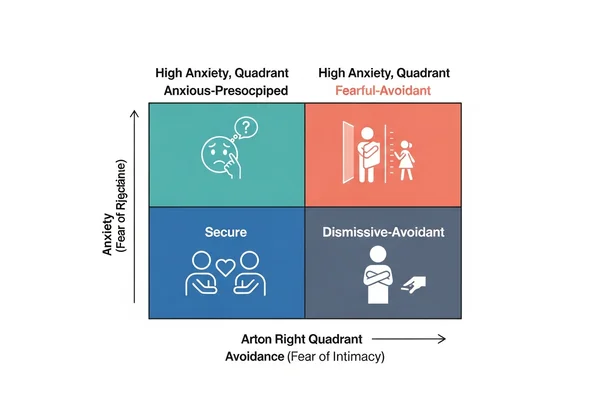
Psychologists generally categorize attachment into four main styles. Most people have a dominant style, though you might show traits of others depending on the situation.
1. Secure Attachment
People with a secure attachment style generally had caregivers who were consistent and responsive. As adults, they are the anchor in a relationship.
- Core Belief: "I am worthy of love, and others are capable of loving me."
- In Relationships: They enjoy intimacy without fearing they will be engulfed. They support their partners and seek support when they are down.
- Conflict: They handle conflict constructively, focusing on solving the problem rather than attacking the person.
2. Anxious-Preoccupied Attachment
Those with an anxious attachment style (often called simply "anxious") likely had inconsistent caregiving—sometimes warm, sometimes distracted or cold. This creates a "hunger" for connection.
- Core Belief: "I am not okay on my own, and I need you to complete me."
- In Relationships: They crave high levels of intimacy and responsiveness. They are often hyper-vigilant for signs of rejection (e.g., “Why didn't they text back immediately?”).
- Key Traits: Clinginess, fear of abandonment, needing constant reassurance.
3. Dismissive-Avoidant Attachment
Dismissive-avoidant individuals often grew up with caregivers who were emotionally unavailable or rejected their needs. To survive, they learned to shut down their needs and rely only on themselves.
- Core Belief: "I don't need anyone. Depending on others is a weakness."
- In Relationships: They value independence above all else. When things get too emotional or close, they pull away to protect their autonomy.
- Key Traits: Emotionally distant, secretive, uncomfortable with vulnerability, labeling partners as "needy."
4. Fearful-Avoidant (Disorganized) Attachment
This is the rarest and most complex style, often stemming from childhood trauma or abuse where the caregiver was a source of fear. It is also known as disorganized attachment.
- Core Belief: "I want to be close, but getting close will hurt me."
- In Relationships: They are caught in a tug-of-war. They desire love but are terrified of it. Their behavior can be confusing—pulling you close one day and pushing you away the next.
- Key Traits: Volatile emotions, difficulty regulating feelings, high anxiety mixed with avoidance.
How Your Attachment Style Affects Your Relationships
Your attachment style acts like a lens through which you interpret your partner's actions. It dictates how you communicate, how you fight, and how you show love.

The "Anxious-Avoidant" Trap
One of the most common (and painful) pairings is between an anxious person and an avoidant person.
- The Cycle: The anxious partner feels insecure and demands reassurance (pursues). The avoidant partner feels overwhelmed and withdraws (distances). This withdrawal creates more anxiety in the first partner, who pursues harder, causing the avoidant partner to run further.
- The Result: A roller-coaster relationship filled with highs and lows, often mistaken for "passion."
Conflict Resolution
- Secure: Communicates needs clearly. “I felt hurt when you said that.”
- Anxious: May protest or act out to get attention. “You never care about me!”
- Avoidant: Shuts down or leaves the room. “I’m not doing this right now.”
Signs You Might Be Struggle with Insecure Attachment
You might be seeing patterns if:
- You constantly worry your partner will leave you.
- You feel suffocated when a partner wants to see you every day.
- You sabotage relationships when they are going well.
- You find yourself attracted to people who treat you poorly.
Can You Change Your Attachment Style?
This is the most important question: Yes, you can.
Your attachment style is plastic, not stone. Through a process called "Earned Security," you can rewire your brain to form secure bonds. This usually happens through:
- Self-Awareness: Recognizing your triggers and patterns (often starting with a test or journaling).
- Therapy: Working with a therapist to process early wounds.
- Corrective Experiences: Being in a relationship with a securely attached person who teaches you that consistency is safe.
- Patience: Changing neural pathways takes time.
Discover Your Style Today
Knowledge is power. The moment you name your pattern—"Oh, I'm doing that protest behavior again"—you take away its power to control you.
Meaningful change starts with an honest look at yourself. It can be hard to spot these traits in the mirror, which is why using an objective tool can be so helpful.
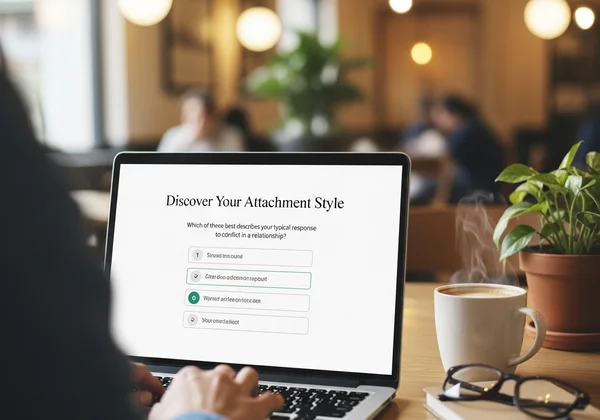
If you are ready to stop guessing and start understanding, you can try the attachment style test right now. It is a free, educational resource designed to help you map out your emotional landscape.
Why Take an Assessment?
- Clarity: Get a clear profile of where you fall on the Anxiety vs. Avoidance scale.
- Insight: Understand why you react the way you do.
- Growth: Receive personalized tips on how to move toward security based on your unique profile.
Remember, this isn't a diagnosis—it's a tool for self-discovery.
Frequently Asked Questions
What is the most common attachment style?
Roughly 50-60% of the population has a secure attachment style. The remaining percentage is split between the three insecure styles, with anxious and avoidant being fairly common.
Can I have more than one attachment style?
Yes. While most people have a dominant style, you might have different attachments with different people (e.g., secure with friends but anxious with romantic partners), or you might be a mix of anxious and avoidant (disorganized).
Is attachment style genetic?
Partial research suggests a small genetic component, but it is primarily learned through environment and early caregiving experiences. It is "nurture" more than "nature."
How do I know if my partner is avoidant?
Common signs include sending mixed signals, prizing independence over the relationship, being vague about the future, and pulling away when emotional intimacy deepens.
Can an anxious and avoidant couple make it work?
Yes, but it requires work and self-awareness from both sides. The anxious partner must learn self-soothing, and the avoidant partner must learn to tolerate intimacy and communicate regarding their need for space.
Where can I find a comprehensive guide?
For a deep dive into all the nuances, check out our comprehensive attachment style guide which offers extensive resources and actionable advice.