Cause of ADHD: What Research Says About Risks, Myths, and Early Signs
The cause of ADHD is one of the most searched questions about attention, impulsivity, restlessness, and executive function. The shortest accurate answer is also the most important one: ADHD does not appear to come from one single source. Research points to a mix of inherited risk, brain development, prenatal and early-life exposures, and the environment a person grows up in. That can feel less tidy than a simple explanation, but it is also less blaming. If you are trying to understand attention patterns in yourself or someone close to you, relationship self-reflection tools can sit alongside reliable health information as one gentle way to notice patterns without turning them into labels.
What Is ADHD, Really?
ADHD, or attention-deficit/hyperactivity disorder, is a neurodevelopmental condition. It is usually noticed in childhood, but it can continue into teen years and adulthood. The core signs involve patterns of inattention, hyperactivity, and impulsivity that are frequent, persistent, and disruptive across more than one setting.
That matters because ordinary distraction is not the same thing as ADHD. Everyone loses focus, procrastinates, forgets a task, interrupts sometimes, or feels restless after poor sleep. ADHD is different because the pattern tends to be ongoing, shows up repeatedly, and affects school, work, relationships, home life, or emotional regulation.
ADHD diagnostic criteria typically look at age of onset, symptom pattern, impairment, and whether another explanation may better account for the difficulties. Anxiety, depression, sleep problems, learning differences, trauma, substance use, thyroid concerns, and high stress can all create ADHD-like problems. That is why a proper clinical evaluation is a process, not a single quiz, lab test, or brain scan.
The Main Cause of ADHD Is Not One Thing
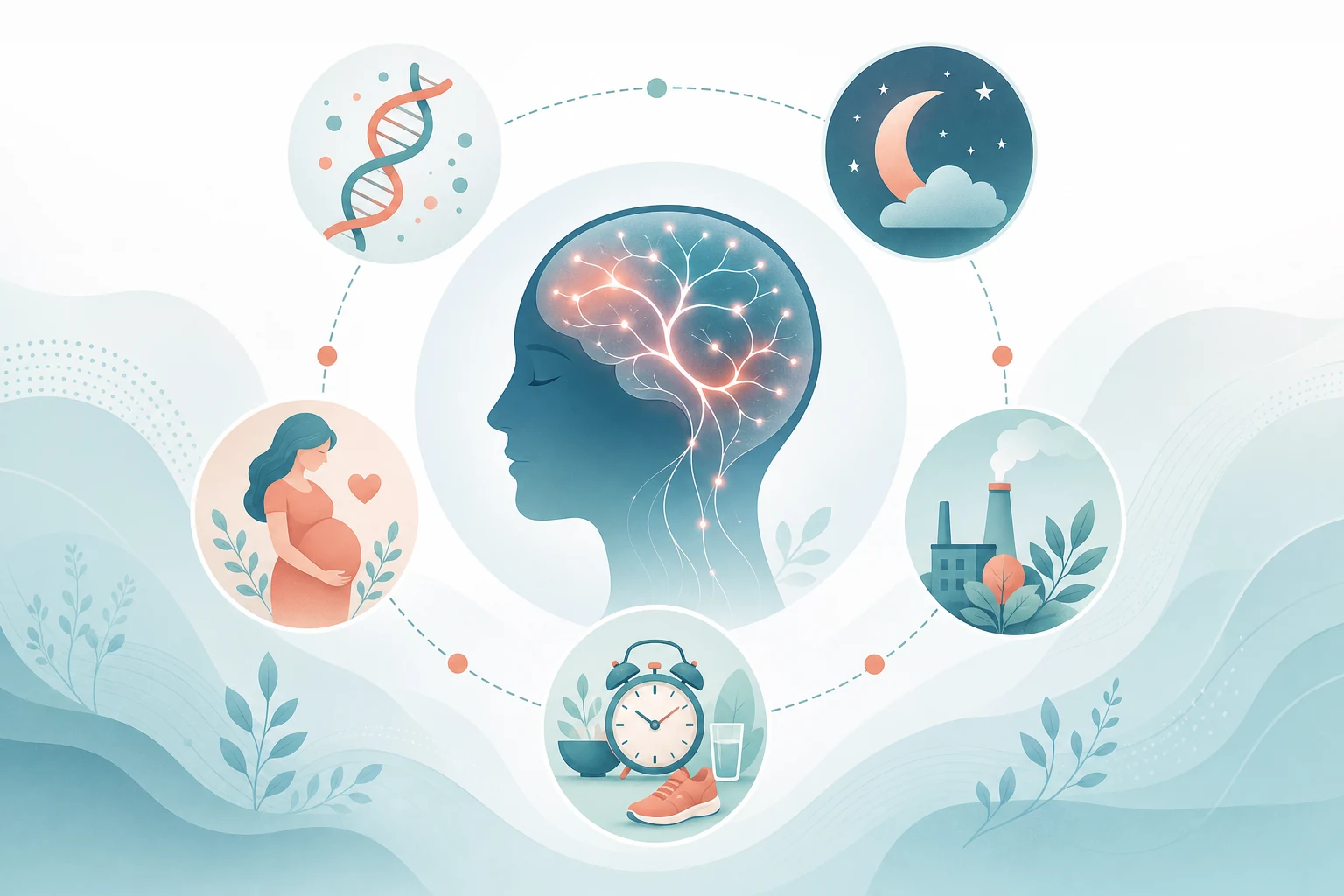
The best way to think about the cause of ADHD is multifactorial risk. A person may be born with a higher inherited likelihood, then early development and environment can influence how strongly symptoms show up, how impairing they become, and which supports help.
This also means ADHD is not caused by laziness, poor character, weak willpower, or a child simply refusing to behave. Parenting style does not create ADHD by itself. However, the environment can affect daily outcomes. Predictable routines, sleep, emotional support, school accommodations, and calm communication may reduce impairment. Chaos, chronic conflict, poor sleep, or untreated co-occurring conditions may make symptoms harder to manage.
Useful ADHD data often separates risk factors from direct causes. A risk factor raises the likelihood of ADHD or ADHD-like symptoms in a population; it does not mean one person will definitely develop ADHD. This distinction protects families from unnecessary blame and helps adults make realistic plans.
Genetics and Brain Development Play a Large Role
Genes are one of the strongest known contributors to ADHD risk. ADHD often runs in families, and many adults first recognize their own lifelong patterns when a child is being evaluated. This does not mean there is one ADHD gene. Current research suggests many genes may each add a small amount of risk, especially genes involved in brain development, attention regulation, reward processing, and impulse control.
Brain development is another key part of the picture. Studies have found differences, on average, in networks that support attention, planning, inhibition, timing, motivation, and emotional regulation. These are group-level findings, not a way to identify ADHD in a single person from an image. Still, they help explain why ADHD can feel like a difficulty with self-management rather than a simple lack of effort.
The phrase cause of ADHD brain often appears in searches because people want a concrete answer. A more careful answer is that ADHD involves differences in brain structure, brain activity, and chemical signaling, especially in systems that help a person pause, prioritize, sustain effort, and shift attention. Those differences can be shaped by genetics and early development.
For people exploring both attention and relationship patterns, attachment pattern resources may help separate two layers: neurological attention patterns on one side, and emotional connection habits on the other. They can interact, but they are not the same thing.

Pregnancy, Birth, and Early-Life Factors
Some ADHD risk factors begin before or around birth. Research has linked higher risk with premature birth, low birth weight, prenatal exposure to alcohol or tobacco, certain pregnancy-related complications, and early exposure to environmental toxins such as lead. Significant head injuries in childhood may also contribute in some cases.
These links should be handled carefully. They do not mean a parent caused a child's ADHD. Many pregnancies include risk factors and no ADHD; many people with ADHD have no clear prenatal or birth-related event. The more accurate message is that early brain development is sensitive, and some exposures can increase vulnerability.
ADHD inattention may become obvious only when demands rise. A young child may seem dreamy, slow to start, or easily pulled away from tasks. A teen may fall behind when assignments require planning across weeks. An adult may function well in urgent situations but struggle with admin, time estimates, email, chores, or remembering details. The underlying vulnerability may have been present for years, while the impairment becomes clearer when life asks for more independent organization.
What Does Not Cause ADHD?
Several popular explanations are not supported as the root cause of ADHD. Sugar does not cause ADHD. Food additives are not considered a general cause. Vaccines are not considered a cause. Too much screen time does not create ADHD from nothing, although screens can worsen sleep, displace exercise, and make attention feel more scattered.
Sleep deserves special mention because searches often ask whether lack of sleep can cause ADHD. Poor sleep can create ADHD-like symptoms: irritability, forgetfulness, low motivation, impulsive eating, emotional outbursts, and difficulty focusing. It can also worsen symptoms in someone who already has ADHD. But sleep loss by itself is not usually described as the underlying neurodevelopmental cause of ADHD.
The same distinction applies to stress and relationships. Chronic stress can make attention and emotional regulation harder. A tense home, inconsistent routines, or a parent who is also struggling with ADHD can affect a child's day-to-day functioning. That is different from saying family dynamics are the sole cause. A more compassionate frame is that families may need support for routines, communication, and emotional regulation, especially when ADHD traits appear across generations.
ADHD in Girls, Women, and Adults
ADHD girl and Female ADHD searches have grown because many girls and women have been missed or misunderstood. Hyperactivity may appear less as running or climbing and more as inner restlessness, talkativeness, emotional intensity, overcommitment, or mental noise. Inattention may be hidden by perfectionism, anxiety, people-pleasing, or enormous effort behind the scenes.
Causes of ADHD in women are not fundamentally separate from causes in men. Genetics, brain development, early-life risks, and environment still matter. What differs is often recognition. Girls may be less disruptive in class, may mask symptoms longer, or may be described as anxious, sensitive, messy, or underperforming relative to ability.
Adult ADHD is not usually a brand-new condition that appears out of nowhere. More often, the person had lifelong traits that became harder to compensate for when school structure disappeared, work complexity increased, parenting began, sleep decreased, or responsibilities multiplied. When symptoms seem new in adulthood, it is especially important to consider sleep, depression, anxiety, burnout, medical conditions, medications, substance use, and major life stress.
People searching for Chinese for inattentive ADHD are often trying to translate a concept that means more than "not paying attention." It refers to difficulty regulating attention, effort, organization, and follow-through.
How Do I Know If I Have ADHD?
You cannot know from one article alone, and it is safer not to reduce a complex question to a checklist. Still, you can notice whether your attention patterns have a long history, show up across settings, and create real impairment.
Consider these reflection questions:
- Did attention, organization, impulsivity, or restlessness cause problems before adulthood?
- Do the patterns appear in more than one setting, such as work and home?
- Do you repeatedly miss deadlines, lose items, interrupt, underestimate time, or avoid tasks that require sustained effort?
- Do sleep loss, anxiety, depression, trauma, or substance use better explain the timing?
- Have teachers, partners, family members, or coworkers noticed the same pattern over time?
If the answer to several questions is yes, a qualified clinician can help sort ADHD from look-alike issues. For children, pediatricians, psychologists, psychiatrists, school teams, and other trained professionals may be involved. For adults, an evaluation often includes developmental history, current symptoms, impairment, co-occurring conditions, and sometimes input from someone who knew the person earlier in life.
Supplements come up often, too. Evidence varies, and supplements can interact with medications or medical conditions. Discuss supplements, medication, behavioral strategies, or school/work accommodations with a licensed healthcare professional who knows the person's history.

Understanding ADHD Causes Without Turning Them Into Blame
The most helpful cause of ADHD explanation is both scientific and humane. ADHD is associated with inherited vulnerability, brain development, and certain early-life risks. Daily environment can shape how symptoms are expressed, but it should not be used as a weapon against parents, partners, teachers, or the person with ADHD.
That balance matters in relationships. ADHD can affect listening, timing, follow-through, emotional reactivity, and repair after conflict. Attachment patterns can affect how safe, rejected, pursued, or overwhelmed people feel inside those same moments. If you are trying to understand attention patterns and relationship reactions together, a gentle self-exploration space can help you reflect on connection habits while you seek appropriate health guidance for ADHD concerns.
The goal is not to find one perfect root cause. The goal is to understand enough to reduce shame, choose better supports, and respond to real needs with steadier care.
FAQ
Are you born with ADHD or is it caused?
ADHD is best understood as a neurodevelopmental condition with strong inherited influence and additional risk factors. A person may be born with a higher vulnerability, while prenatal, birth, early-life, and environmental factors can influence how symptoms develop and how impairing they become.
What are three causes of ADHD?
It is more accurate to say three major risk areas: genetics, brain development, and early environmental or medical exposures. Examples include family history, differences in attention and impulse-control networks, premature birth, prenatal alcohol or tobacco exposure, lead exposure, or significant head injury.
Can ADHD be managed?
Yes, many people improve daily functioning with the right support. Options may include behavioral strategies, parent training, school or workplace accommodations, medication, coaching, sleep support, therapy for co-occurring concerns, and routines that reduce friction. The right plan depends on age, symptoms, goals, and medical history.
At what age is ADHD at its peak?
There is no single peak age for everyone. Hyperactive behavior is often most visible in childhood, while inattention and executive function problems may become more obvious as school, work, and life demands increase. Some adults feel symptoms more strongly when structure decreases or responsibilities grow.
Can lack of sleep cause ADHD symptoms?
Lack of sleep can cause ADHD-like problems, including poor focus, irritability, forgetfulness, and low motivation. It can also worsen existing ADHD symptoms. Sleep problems should be considered during evaluation because improving sleep may reduce impairment even when ADHD is also present.
How does a parent with ADHD affect a child?
A parent with ADHD may pass on genetic risk, and family routines may be harder to maintain if the parent is unsupported. That is not a moral failure. Practical supports such as shared calendars, simplified routines, treatment when appropriate, and compassionate communication can help both parent and child.
Why is ADHD sometimes missed in girls and women?
Girls and women may show more inattentive symptoms, internal restlessness, emotional overload, or masking. They may work very hard to appear organized, then feel exhausted behind the scenes. As demands increase, the hidden cost can become more visible.