Childhood Attachment Styles: 4 Patterns, Signs, and Adult Relationship Effects
Childhood attachment styles describe the patterns children may develop as they learn whether closeness, comfort, and emotional repair are available when they need them. They are not fixed personality types, and they are not a clinical label. Still, they can give parents, educators, and adults reflecting on their past a practical language for understanding connection. If you are exploring your own relationship patterns now, a gentle attachment style self-reflection tool can help you notice themes without turning them into a final answer about who you are.
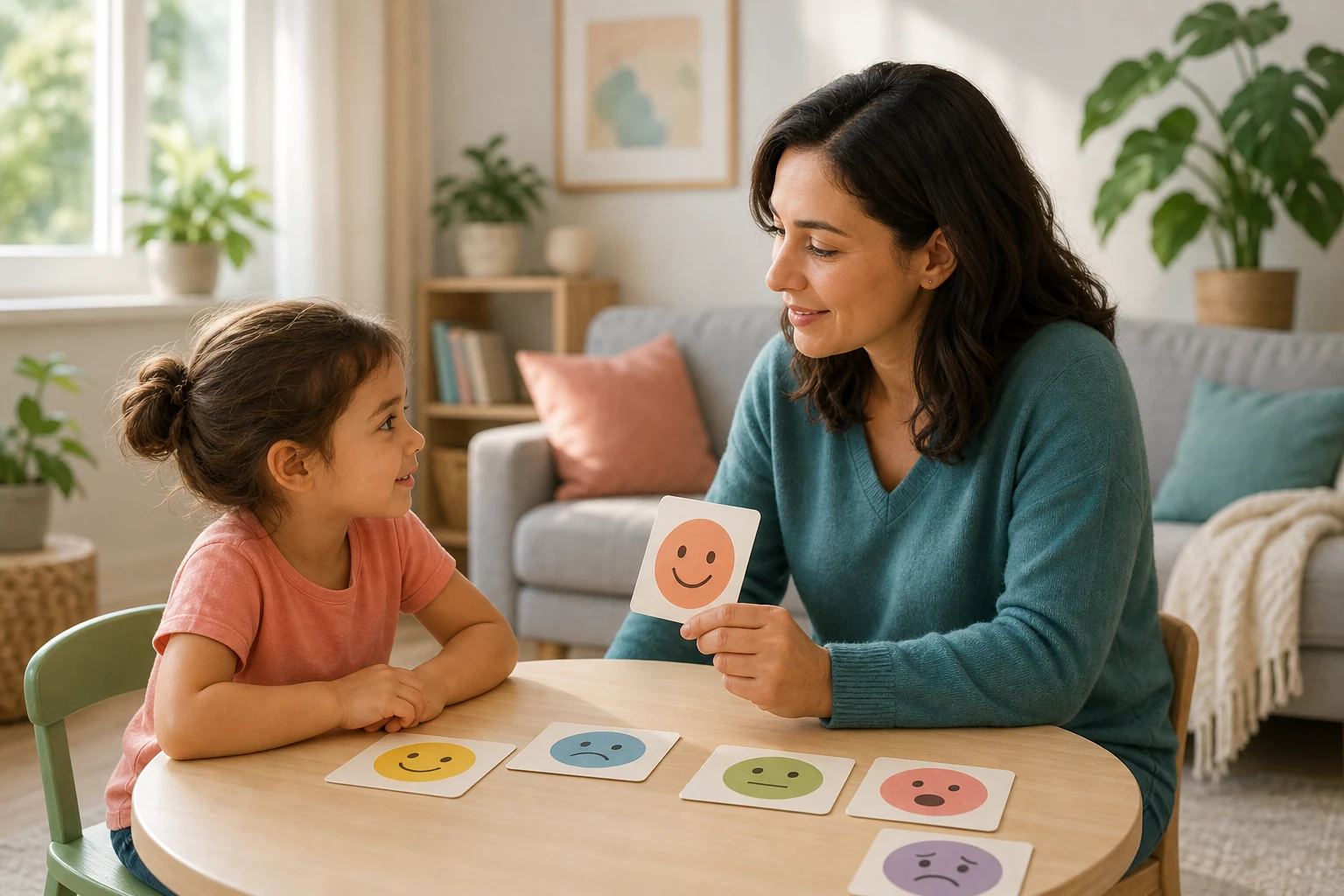
What childhood attachment styles mean
Attachment theory began with the observation that children use trusted caregivers as a safe base. When the child feels safe enough, they explore. When they feel tired, hurt, afraid, or overwhelmed, they seek proximity. Over time, repeated moments of response, repair, distance, confusion, or inconsistency can shape what the child expects from close relationships.
That is why childhood attachment styles are best understood as adaptive patterns. A child is not trying to be difficult when they cling, shut down, hide feelings, or act unpredictable. Their nervous system is often trying to keep connection as available and manageable as possible.
The four common categories are safe, anxious or ambivalent, avoidant, and disorganized attachment. Real children are more complex than categories, and culture, temperament, stress, disability, family transitions, and caregiver wellbeing all matter. The value of the framework is not to sort children into boxes. It is to ask a better question: what does this child seem to expect from closeness, comfort, and repair?
The 4 types of attachment in infants and children
Safe attachment
A safely attached child usually trusts that a caregiver will be available enough. They may cry when separated, but they can often be comforted when the caregiver returns. They use the caregiver as a base for exploration and a place to return when emotions rise.
Safe attachment does not require perfect parenting. It grows from enough attunement, repair after missteps, predictable care, and emotional safety. A safely attached child can still have tantrums, anxiety, or hard days. The key pattern is that connection tends to feel possible again after stress.
Anxious or ambivalent attachment
An anxious or ambivalent pattern can develop when care feels loving at times but hard to predict. A child may become highly alert to separation, reassurance, or signs that attention might disappear. They may seek closeness intensely, yet stay upset even when comfort is offered.
In daily life, this can look like clinging, repeated checking, strong distress during transitions, or difficulty settling after a caregiver returns. The child may seem to be asking, "Are you really still here for me?" The goal is not to shame the need for reassurance, but to make comfort more steady and predictable.
Avoidant attachment
A less-safe avoidant attachment pattern can appear when a child learns that showing need does not reliably bring comfort, or may bring dismissal. The child may look independent, calm, or uninterested in comfort, even when their body is stressed.
Examples can include turning away after separation, minimizing hurt feelings, insisting they do not need help, or focusing on toys instead of people when upset. This does not mean the child has no need for closeness. It may mean closeness has felt safer when emotions are kept smaller or hidden.
Disorganized attachment
Disorganized attachment can involve mixed, contradictory, or confusing responses to a caregiver. A child may approach and then freeze, seek comfort and then push away, or seem unsure whether closeness is safe. People may search for signs of disorganised attachment in a child when behavior feels hard to interpret.
This pattern is often discussed in relation to frightening, chaotic, or unresolved caregiving experiences, but it should be handled carefully. A single behavior does not prove a history or predict a future. When safety concerns, trauma, or severe distress may be involved, families should seek qualified support.
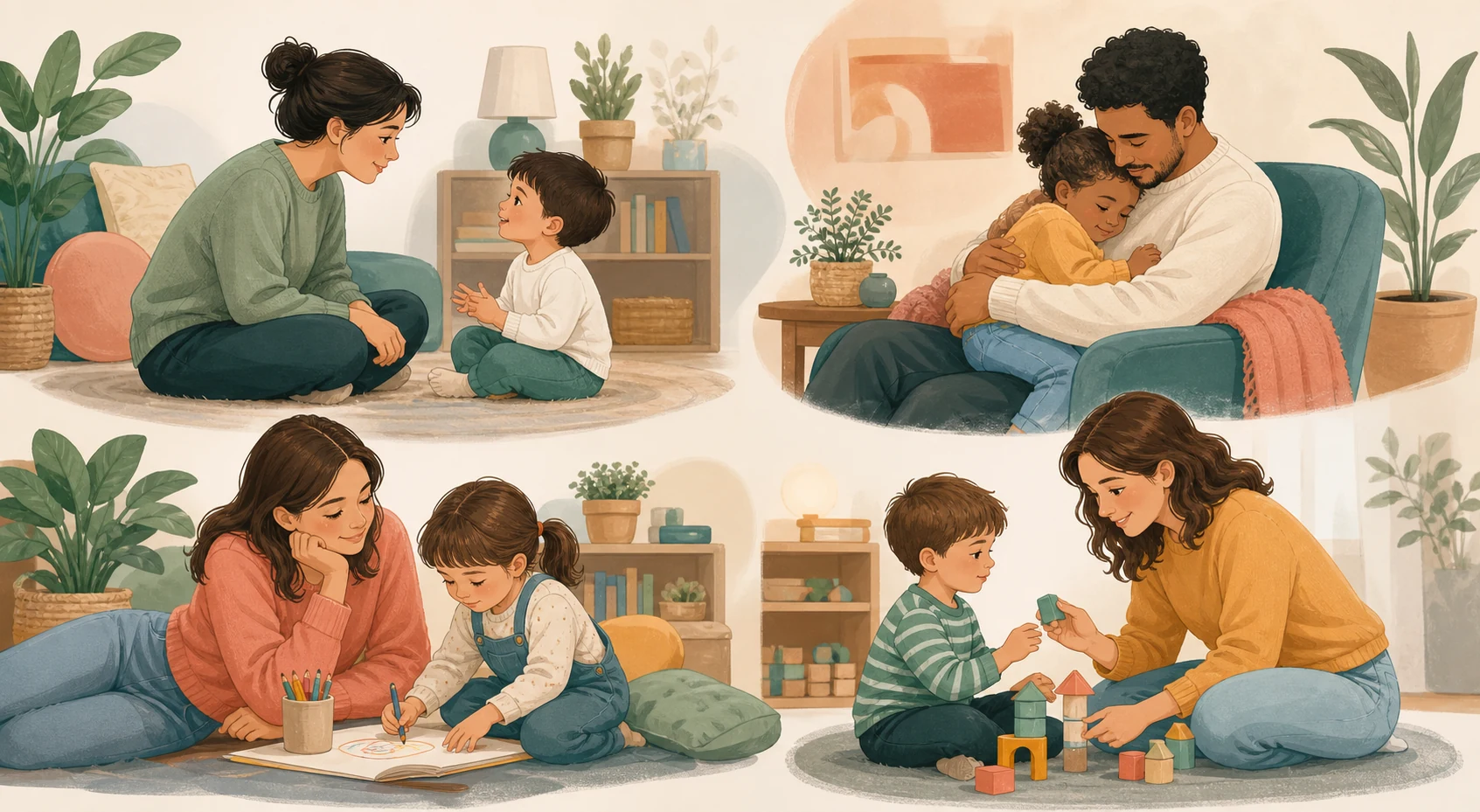
Less-safe attachment child examples without over-labeling
Many searches around attachment styles child development focus on examples: What do less-safe attachment patterns look like? What are signs of unhealthy child attachment? The safest answer is to look for patterns over time, not one moment.
An anxious pattern may show up as distress that is hard to soothe, fear of being left, repeated questions about whether a caregiver is coming back, or strong reactions to small separations. An avoidant pattern may show up as emotional self-sufficiency that seems older than the child, a quick refusal of comfort, or discomfort when adults ask about feelings.
A disorganized pattern may show up as approach-and-avoid behavior, sudden freezing, controlling behavior that seems rooted in fear, or emotional responses that do not match the situation. These examples are signals for curiosity and support, not proof of a category.
It also helps to ask what the child's world has been like recently. A move, divorce, grief, illness, school stress, caregiver burnout, or inconsistent routines can change behavior. Children may also respond differently across caregivers and settings. A child who struggles at daycare may feel safer at home, or the reverse.
For adults reading about their own past, these examples can be emotionally loaded. It is possible to recognize old patterns without blaming yourself or your family. Attachment language works best when it increases compassion and choice.
Childhood attachment styles in adulthood
Childhood patterns can influence adult relationships, but they do not write the whole story. An adult with anxious attachment may become very sensitive to delayed replies, emotional distance, or uncertainty. An adult with avoidant tendencies may value independence, pull back during conflict, or feel crowded by too much emotional intensity. Someone with disorganized or fearful avoidant patterns may want closeness and fear it at the same time.
These links are why childhood attachment styles in adulthood are such a common search topic. Early experiences can shape expectations, but later friendships, therapy, stable partnerships, parenting experiences, spiritual communities, and self-reflection can all create new learning. Attachment style can change, especially when people repeatedly experience safe repair.
If you are noticing adult relationship patterns and want a private starting point, relationship pattern exploration can be useful as an educational mirror. Treat the result as a prompt for reflection rather than a final identity. The more helpful question is not "Which box am I in forever?" but "What do I tend to do when closeness feels uncertain, and what would safer connection look like in that moment?"

How caregivers can support safer attachment
Safer attachment is built through repeated ordinary moments. A caregiver does not need to respond perfectly every time. Children benefit from patterns of warmth, predictability, repair, and respect for their signals.
One practical step is to name the child's feeling without rushing to erase it. "You were scared when I left the room" can help a child feel understood before problem-solving begins. Another step is to make transitions more predictable: simple routines, goodbye rituals, and clear returns can reduce the pressure on a child who worries about separation.
Repair matters just as much as response. When adults lose patience, misunderstand a need, or miss a cue, a short repair can teach safety: "I spoke too sharply. I am here now, and we can try again." This gives the child an experience of conflict followed by reconnection.
Caregivers can also support avoidant patterns by offering comfort without forcing it. A child who turns away may still need calm presence nearby. For anxious patterns, predictable reassurance helps more than endless negotiation. For disorganized patterns, the priority is safety, consistency, and professional guidance when the situation is complex or frightening.

When attachment theory should lead to extra support
Attachment theory in early childhood can be helpful, but it is not a substitute for skilled care when a child or family is under serious strain. Consider extra support when a child shows prolonged distress, fear of a caregiver, sudden behavior changes, aggression that feels unsafe, severe withdrawal, sleep or eating disruption, or signs that the home environment is not emotionally or physically safe.
Support can come from a pediatrician, child therapist, family therapist, school counselor, early childhood specialist, or local crisis resource depending on the concern. For adults, support may mean therapy, coaching from a qualified professional, or steady relational practices with people who can respond consistently.
The point is not to turn every attachment question into a crisis. It is to use the framework responsibly. When the pattern is mild, education and routine changes may help. When the pattern is intense, confusing, or linked with safety concerns, more support is a sign of care.
Use childhood attachment styles as a compassionate map
The most useful way to understand childhood attachment styles is as a map of learned expectations. Safe patterns often say, "Connection is available." Anxious patterns may say, "I have to hold on tightly." Avoidant patterns may say, "It is safer not to need too much." Disorganized patterns may say, "Closeness is both needed and confusing."
Maps can be updated. Children can experience steadier care. Adults can practice naming needs, tolerating closeness, creating boundaries, and repairing conflict. Families can learn routines that make connection feel more predictable. If you want to keep reflecting on your own patterns with a gentle, non-judgmental lens, attachment growth resources can be a supportive next step.
FAQ
What are the 4 attachment styles in childhood?
The four commonly discussed childhood attachment styles are safe, anxious or ambivalent, avoidant, and disorganized. Safe attachment involves trust in caregiver availability. Anxious attachment involves heightened worry about closeness. Avoidant attachment involves minimizing visible need. Disorganized attachment involves confused or contradictory responses to closeness.
What are the attachment styles of childhood trauma?
Childhood trauma can affect attachment, but no single attachment style automatically proves trauma. Disorganized attachment is often discussed in relation to frightening or chaotic caregiving, while anxious and avoidant patterns can also develop around inconsistency or emotional distance. It is better to treat trauma-related questions with care and qualified support.
What is toxic attachment in a relationship?
"Toxic attachment" is a casual phrase people use when a bond feels harmful, controlling, unstable, or hard to leave. In attachment terms, it may involve fear, anxious pursuit, avoidance, poor boundaries, or repeated conflict cycles. The phrase is not a formal attachment style, so it is more useful to describe the pattern and seek support when needed.
What is the hardest attachment style to live with?
There is no universal hardest style. Each pattern can feel painful in different ways. Anxious attachment may feel exhausting because reassurance never lasts long. Avoidant attachment may feel lonely because closeness feels pressured. Disorganized attachment can feel especially confusing because the person may want connection and fear it at once.
Can attachment style change in childhood?
Yes. A child's attachment pattern can shift when caregiving becomes more consistent, safe, and responsive over time. Change is more likely when adults notice the child's signals, repair ruptures, keep routines predictable, and get support for stress that makes caregiving harder.
How do childhood attachment styles affect adult relationships?
They can shape expectations around closeness, conflict, reassurance, and independence. For example, an anxious pattern may become fear of abandonment, while an avoidant pattern may become discomfort with emotional dependence. Adult experiences can also reshape these expectations, so early patterns are influential but not final.