Completely Dismissed in Attachment Style: What It Means and How to Respond
Feeling completely dismissed in attachment style conversations can be confusing. One person may say, "I am fine," while the other feels ignored, emotionally shut out, or suddenly unimportant. In attachment language, this often points toward a dismissing or dismissive avoidant pattern, but it does not mean someone is cold, uncaring, or beyond growth. It means emotional need may have become linked with discomfort, pressure, or loss of control. If you are trying to understand your own pattern gently, a gentle attachment style quiz can be a private first step for reflection, not a formal mental health assessment.
What Dismissing Usually Means in Attachment Theory
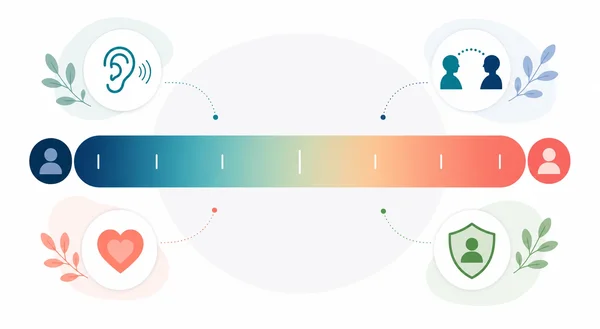
A dismissing attachment style is commonly associated with the avoidant attachment style. The central move is deactivation: the person turns down the volume on attachment needs, especially when closeness begins to feel demanding. Instead of reaching for comfort, they may rely on logic, distance, work, humor, distraction, or independence.
That can look like strength from the outside. A dismissing person may seem calm in conflict, capable under pressure, and very self-sufficient. Inside, the pattern can be more complicated. Emotional closeness may feel risky because it brings up the possibility of rejection, dependence, criticism, or being overwhelmed by someone else's needs.
This is why "completely dismissed in attachment style" can describe two sides of the same interaction. The person with the dismissing strategy may be trying to stay regulated. The person on the receiving end may experience the same behavior as emotional erasure.

How Being Completely Dismissed Can Feel in Relationships
In relationships, feeling dismissed usually means your emotional bid does not land. You share hurt and receive a quick solution. You ask for reassurance and get silence. You bring up a vulnerable topic and the other person changes the subject, minimizes the issue, or says you are overthinking.
Common signs include:
- Your feelings are treated as inconvenient rather than meaningful.
- Serious conversations end with "it is not a big deal."
- The other person withdraws after moments of closeness.
- Practical advice replaces empathy every time.
- You feel you must become smaller, calmer, or less needy to keep the connection.
These moments can be especially painful for someone with a preoccupied attachment style, because preoccupied patterns tend to seek closeness when threat appears. One partner moves toward the relationship for safety; the other moves away for safety. Neither reaction is random, but the cycle can still hurt both people.
Why a Dismissing Attachment Style Can Form With a Father or Caregiver
Searches like "dismissing attachment style with father" often come from people trying to understand early emotional learning. A child does not need a perfect caregiver. But if a father or another caregiver repeatedly responds to sadness, fear, or need with discomfort, ridicule, impatience, or emotional absence, the child may learn a quiet rule: needing comfort does not help.
Over time, the child may adapt by becoming unusually independent. They may stop asking for help, hide disappointment, or act like nothing matters. This can be a smart childhood survival strategy. The problem is that the same strategy can follow the person into adult relationships, where emotional availability matters.
This does not mean every dismissive avoidant attachment style comes from a father, or that a caregiver intended harm. Family stress, culture, grief, mental health challenges, and a caregiver's own attachment history can all shape emotional availability. The useful question is not "who is to blame?" It is "what did my nervous system learn about closeness, need, and safety?"
How Dismissing Relates to Avoidant, Fearful Avoidant, Preoccupied, and Safe Styles
Attachment language can get blurry because people use "avoidant," "dismissive avoidant," "fearful avoidant," and "disorganized attachment style" in overlapping ways. A simple comparison helps.
| Attachment pattern | Common response to closeness | What may be happening underneath |
|---|---|---|
| Safe attachment pattern | Can move toward closeness and keep boundaries | Needs and independence both feel acceptable |
| Dismissive avoidant attachment style | Pulls back, minimizes, or relies on self | Need may feel unsafe, weak, or intrusive |
| Fearful avoidant attachment | Wants closeness but fears it at the same time | Connection and threat may feel tangled |
| Preoccupied attachment style | Pursues reassurance and closeness under stress | Distance may feel like abandonment |
| Disorganized attachment style | Shifts between approach, fear, shutdown, or confusion | Safety cues may feel inconsistent or hard to trust |
The point of these labels is not to put people in boxes. They are maps. A map can help you notice a pattern, choose a different response, and speak about needs with more compassion.
Why Dismissal Can Trigger Anxiety, Shutdown, or Abrupt Distance
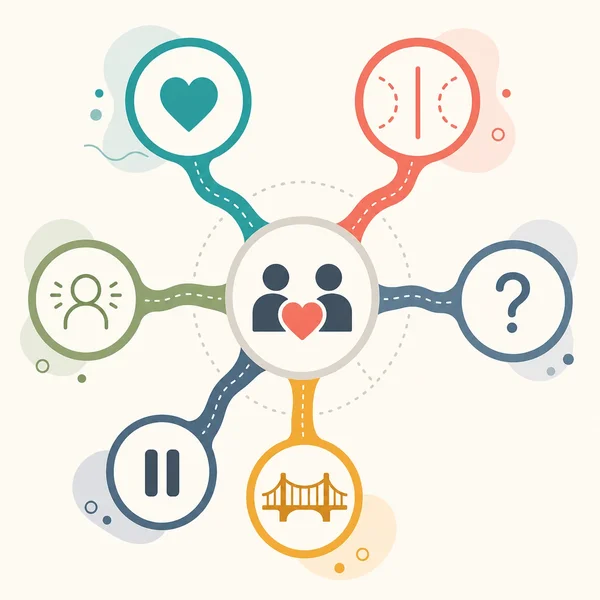
When someone feels completely dismissed in attachment style dynamics, the body often reacts before the mind can organize the moment. The dismissed partner may feel anxious, angry, ashamed, or desperate to prove that the relationship matters. The dismissing partner may feel crowded, criticized, or pressured to perform emotion correctly.
This is how a small conversation can become a large cycle. One person says, "You never listen." The other hears, "I am failing," and shuts down. The first person experiences the shutdown as proof that they do not matter. The second person experiences the pursuit as proof that closeness is too much.
People also ask which attachment style is more likely to abruptly discard. It is safer to avoid turning that into a prediction. Abrupt distance can show up in dismissive avoidant patterns, fearful avoidant patterns, unresolved conflict, low relationship skills, or situations where a person feels overwhelmed. The key signal is not a label. It is whether someone can return to the conversation, repair, and take responsibility for their part.
If you are trying to sort out whether a pattern is mostly avoidant, preoccupied, emotionally available, or mixed, a relationship pattern self-reflection tool can help you organize what you notice before you talk with a partner, friend, or professional.
A Practical Response Plan When You Feel Dismissed
You cannot force someone into emotional presence, but you can make the moment clearer and protect your own steadiness. Try a three-part response.
First, name the pattern without attacking character. For example: "When I share something vulnerable and the topic changes quickly, I feel dismissed." This keeps the focus on the interaction rather than turning the person into the problem.
Second, make one specific request. A dismissing person may freeze when a conversation feels emotionally endless. Concrete requests can reduce pressure. Try: "Could you reflect back what you heard before we solve it?" or "Could we stay with this for ten minutes before taking space?"
Third, choose a boundary if dismissal continues. A boundary is not punishment. It is a way to keep the conversation from becoming harmful. You might say, "I want to talk about this, but I do not want to keep going if my feelings are being minimized. I am going to pause and come back later."
It also helps to separate empathy from agreement. You are not asking the other person to agree with every detail of your interpretation. You are asking them to recognize that your inner experience matters.

When the Dismissing Pattern Is Yours
If you recognize the dismissing side in yourself, the goal is not to become endlessly emotionally available overnight. That would likely feel fake and exhausting. The goal is to build a little more choice into the moment before you withdraw.
Start by noticing your first exit strategy. Do you intellectualize? Do you joke? Do you get busy? Do you say "I am fine" when you are not? These moves may have helped you survive earlier relationships, but they may now block the closeness you actually want.
Next, practice a small emotional sentence. It can be simple: "I am overwhelmed," "I need a few minutes," or "I want to respond well, but I am shutting down." These sentences do not require a dramatic disclosure. They simply keep the bridge open.
Then repair after distance. If you need space, say when you will return. If you minimized someone, acknowledge the impact. Try: "I can see that my response made you feel alone. I was overwhelmed, but I do care about what you said." Repair is one of the most stabilizing behaviors a person can practice.
Moving Toward Safer Connection Without Forcing Closeness
The most helpful shift is not from dismissing to dependent. It is from automatic protection to flexible connection. A safer attachment pattern does not mean constant closeness. It means a person can need others without losing themselves, and can take space without making the other person feel erased.
If you have felt completely dismissed in attachment style patterns, try to hold two truths together. Your hurt matters. The other person's protective strategy may also have a history. Holding both truths does not excuse harmful behavior, but it can keep the conversation grounded enough for change.
For a low-pressure way to reflect on your own patterns, you can explore attachment style self-exploration and use what you notice as a starting point for journaling, conversation, or professional support if the relationship feels unsafe or consistently painful.
FAQ
What does a dismissing attachment style mean?
A dismissing attachment style usually means a person has learned to downplay emotional needs and rely heavily on independence. In adult relationships, this can show up as withdrawal, minimizing feelings, discomfort with vulnerability, or a preference for solving problems without much emotional discussion.
What is the hardest attachment style to love?
There is no single hardest attachment style to love. Each pattern can be difficult when it becomes rigid. Preoccupied attachment can feel intense, dismissive avoidant attachment can feel distant, fearful avoidant attachment can feel unpredictable, and disorganized attachment can feel confusing. Safer relationship behaviors become easier when both people can notice the cycle and practice repair.
Which attachment style is more likely to abruptly discard?
Abrupt distancing is often associated with avoidant or fearful avoidant patterns, but it is not limited to one style. Stress, conflict avoidance, shame, poor communication, or an unsafe relationship can also lead someone to leave suddenly. The healthier question is whether the person can communicate, repair, and end relationships with respect.
What attachment style has the highest divorce rate?
Reliable relationship outcomes depend on many factors, including communication, repair, stress, support, values, and timing. Less stable attachment patterns may be linked with lower satisfaction in some relationships, but it is too simplistic to say one style has the highest divorce rate for everyone. A safer pattern can reduce risk by supporting trust, responsiveness, and repair.
Is dismissive avoidant the same as fearful avoidant attachment?
No. Dismissive avoidant attachment usually leans toward emotional distance and self-reliance. Fearful avoidant attachment often includes both longing for closeness and fear of closeness. A fearful avoidant person may pursue connection in one moment and retreat in the next, especially when vulnerability feels unsafe.
Can a child feel completely dismissed without obvious neglect?
Yes. A child can feel emotionally dismissed even when basic care is present. Repeated minimization, lack of comfort, harsh responses to emotion, or a family rule that needs should stay hidden can teach a child to suppress feelings. That learning can soften later through safe relationships, reflection, and support.