Types of Relationship Patterns: An Attachment Lens
When you search for types of relationship, you may want a simple list: romantic, family, friendship, dating, or something harder to name. However, types of relationship can also point to a deeper question: “Why do I keep feeling, reacting, or connecting this way?” This guide helps you sort the outer category from the inner pattern. You will see common types of relationships, learn how relationship dynamics differ from labels, and explore how attachment styles may shape closeness, distance, reassurance, and conflict. If you want a gentle next step, an attachment style quiz for self-reflection can support insight without replacing professional support.

What Does Types of Relationship Mean?
The phrase types of relationship can mean several things. Sometimes it means the social role: partner, friend, parent, coworker, or family member. Other times, it means the emotional shape of the bond: close, distant, secure, tense, confusing, or supportive.
That difference matters. You can have two romantic relationships that look similar from the outside, yet feel very different inside. One may feel steady and honest. Another may feel full of checking, withdrawing, or walking on eggshells.
So, when you think about types of relationship, ask two questions:
- What kind of relationship is this on the outside?
- What pattern keeps showing up on the inside?
The first question helps you name the category. The second helps you understand the dynamic. Together, they give you a clearer picture than a list alone.
Common Types of Relationships People Experience
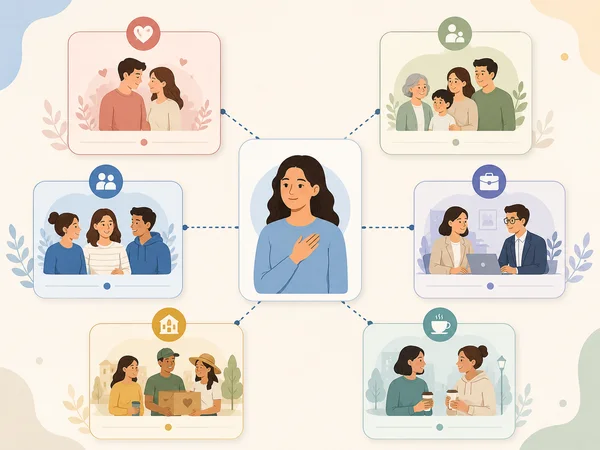
When people talk about types of relationships, they often mean the everyday categories most of us move through. These categories are useful because they describe where the relationship lives in your life.
However, no list is universal. Different writers count different types of relationships because they use different rules. Some count by social role. Others count by emotional closeness, commitment, or romantic structure.
Romantic and Dating Relationships
Romantic relationships often involve attraction, emotional intimacy, and some level of commitment. Types of relationships in dating may include new, undefined, exclusive, casual, long-distance, or committed connections.
For example, you may be in a dating relationship that feels safe and open. Or, you may be in one where small delays in texting feel huge. The label is “dating,” but the inner pattern may involve reassurance, distance, or uncertainty.
Friendships and Family Bonds
Friendships can be light, deep, practical, lifelong, or seasonal. Meanwhile, family relationships may carry history, loyalty, roles, and old expectations.
Because family bonds often begin early, they can shape how you understand closeness. For example, you may feel responsible for everyone’s mood. Or, in contrast, you may protect yourself by staying detached.
Professional and Community Connections
Work, school, and community relationships also count. They may not be romantic, but they still involve trust, respect, boundaries, and communication.
For example, you might avoid asking for help at work because you do not want to seem needy. Or, you may over-explain yourself because conflict feels unsafe. These patterns can appear outside romance too.
Why Different Lists Use 4, 5, 7, or 12 Types
You may see articles that mention 4, 5, 7, 12, or even 20 different types of relationships. Usually, these numbers are not official rules. They are different ways to organize human connection.
A short list may include romantic, family, friendship, and professional bonds. A longer list may add casual dating, situationships, open relationships, long-distance relationships, mentorships, community ties, or strained relationships.
In short, the number matters less than the insight. A list can help you name the setting. But the pattern shows you how the bond feels.
Relationship Types vs. Relationship Dynamics
Types of relationship categories name the container. Types of relationship dynamics describe what happens inside that container.
This is where many readers find the real answer. You may not only wonder, “What kind of relationship is this?” You may also wonder, “Why do we repeat the same loop?”
The Outer Label
The outer label is easy to see. You might say:
- “We are dating.”
- “She is my friend.”
- “He is my parent.”
- “They are my coworker.”
- “This is a situationship.”
These labels matter because they set expectations. However, they do not explain everything. A friendship can feel more emotionally intense than a romance. A family bond can feel distant. A dating relationship can feel secure, confusing, or unstable.
The Inner Pattern
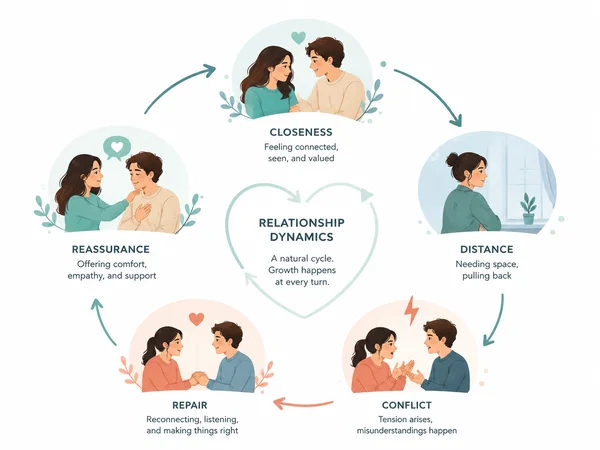
The inner pattern is how the relationship tends to move. For example:
- One person reaches for closeness while the other pulls away.
- Conflict turns into silence instead of repair.
- You feel calm until distance appears.
- You avoid asking for what you need.
- Reassurance helps for a moment, but the worry returns.
These patterns often reveal more than the relationship label. Therefore, if a type of relationship feels confusing, look at the repeated emotional sequence.
Why Dynamics Often Repeat
Patterns repeat because your nervous system learns from experience. If closeness once felt unsafe, distance may feel protective. If inconsistency once felt normal, you may feel drawn to uncertainty.
This does not mean you are stuck. It means your reactions may have a story. Also, once you can name a pattern, you can respond with more choice.
A simple reflection checklist can help:
- What do I usually fear in this relationship?
- What do I do when I feel ignored or pressured?
- Do I reach, withdraw, shut down, or over-explain?
- What helps me feel steady again?
- Is this pattern familiar from other relationships?
How Attachment Styles Shape Relationship Patterns
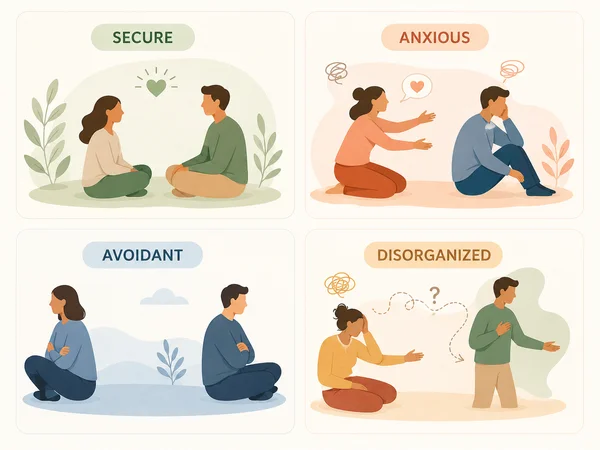
Attachment styles offer one helpful lens for understanding types of relationship dynamics. They do not define your whole personality. Instead, they describe common patterns in how you seek closeness, safety, space, and repair.
You may recognize one style strongly, or you may see pieces of several. Also, your pattern can shift by relationship, stress level, and life stage.
Secure Patterns
A secure pattern often includes comfort with closeness and space. You may still feel hurt, worried, or frustrated at times. However, you can usually talk through issues, ask for support, and repair conflict.
In secure dynamics, boundaries are not threats. They are part of trust. Also, reassurance does not have to become a constant test.
Anxious Patterns
An anxious pattern may show up as a strong need for reassurance, fear of being left, or sensitivity to small changes. For example, a delayed reply may feel bigger than it looks from the outside.
If this sounds familiar, try not to shame yourself. The goal is not to “stop caring.” Instead, the goal is to notice when your alarm system is activated and respond with care.
Avoidant Patterns
An avoidant pattern may show up as discomfort with too much closeness, emotional withdrawal, or a strong need for independence. You may care deeply, yet feel overwhelmed when someone wants more access to your inner world.
In this pattern, distance can feel like safety. However, too much distance can make repair harder. Small, honest communication often helps more than sudden emotional intensity.
Disorganized Patterns
A disorganized pattern may include both longing for closeness and fear of it. You may reach out, then pull away. Or, you may feel confused by your own reactions.
This pattern can feel exhausting. Therefore, gentle support matters. If your relationship patterns involve intense distress, fear, trauma reminders, or safety concerns, consider talking with a qualified professional.
When Relationship Patterns Need Extra Support
Not every hard moment means a relationship is unhealthy. All types of relationship can include stress, conflict, and misunderstanding. However, some patterns need more care than a self-reflection article can offer.
Ordinary Conflict vs. Repeating Harm
Ordinary conflict can still include respect. You may disagree, take space, return, apologize, and repair.
Repeating harm looks different. It may include ongoing blame, fear, humiliation, control, threats, or pressure to ignore your boundaries. If a pattern keeps making you feel smaller, less safe, or less free, pay attention.
Control, Fear, or Coercion
Control can be subtle. It may look like monitoring, isolating, pressuring, or punishing you for having needs. Fear is also important information. If you feel afraid of someone’s reaction, the issue is not only an attachment pattern.
In that case, prioritize safety. Talk with someone you trust. Also, consider professional or local support if you feel at risk.
When Professional Support Matters
Self-reflection can help you notice patterns. However, it cannot replace personal care from a trained professional.
Consider support if:
- You feel unsafe in the relationship.
- Conflict includes threats, control, or coercion.
- Your anxiety or shutdown feels unmanageable.
- Past experiences are strongly affecting current bonds.
- You need help making a safe plan.
In short, attachment language can be useful. But it should never minimize harm.
How to Explore Your Attachment Pattern Gently
Once you understand types of relationship and dynamics, the next step is not to label yourself harshly. Instead, the next step is to observe your patterns with more kindness and accuracy.
Reflection Questions Before You Label Yourself
Before you decide what your attachment style might be, ask:
- What happens in my body when someone gets close?
- What do I do when I fear disconnection?
- Do I ask directly for support, or do I test for it?
- Do I pull away when emotions feel too intense?
- What kind of repair helps me trust again?
These questions are not meant to trap you in a category. Rather, they help you notice your habits.
A Gentle Way to Organize Your Patterns
If your thoughts feel scattered, a structured tool can help. For example, you can explore an attachment style quiz online as a private way to organize your reflections.
The quiz is designed as an educational self-exploration resource. It can help you think about relationship patterns, emotional responses, and possible next steps. However, it should not replace therapy, crisis support, or professional care.
What a Quiz Can and Cannot Tell You
A quiz can give you language. It can help you notice patterns like anxious reaching, avoidant distancing, secure repair, or mixed responses.
However, a quiz cannot know your full history. It cannot assess your safety. It cannot decide what you should do in a complex relationship.
So, use results as a starting point. Then, compare them with your lived experience. If something feels tender or serious, bring it to a trusted professional.

Where Your Relationship Patterns Can Lead Next
Understanding types of relationship is useful, but it is only the first layer. A label can tell you whether a bond is romantic, family-based, professional, casual, or undefined. Yet the deeper insight often comes from noticing the pattern inside the relationship.
You might see that you seek reassurance quickly. Or, you might notice that you shut down when someone wants closeness. Perhaps you feel most steady when communication is clear and repair is possible.
Whatever you notice, try to hold it gently. You are not a fixed type. You are a person learning how connection works for you.
As a next step, you can use the attachment style quiz for relationship patterns to reflect in a structured way. Use it for education and self-understanding, not as a clinical service. And if your situation involves fear, control, harm, or ongoing distress, consider reaching out for qualified support.
Frequently Asked Questions
What are the 4 types of relationships?
The 4 types often mean romantic, family, friendship, and professional relationships. However, lists vary. For deeper insight, look at both the relationship category and the emotional pattern inside it.
What are the 5 types of relationships?
A 5-type list may include romantic, family, friendship, professional, and community relationships. Some lists swap in casual dating or mentorship. The exact number depends on the framework.
What are the 7 types of relationships?
The 7 types vary by source. One version includes romantic, dating, friendship, family, professional, casual, and community relationships. Treat it as a helpful framework, not a universal rule.
What are the 12 types of relationships?
A 12-type list usually expands basic categories. It may include partners, friends, family, coworkers, mentors, long-distance bonds, casual connections, situationships, open relationships, strained ties, supportive bonds, and community connections.
What are the six types of relationships?
Six types may include romantic, family, friendship, professional, casual, and community relationships. Still, no single list is official. The emotional dynamic often matters more than the number.
What are the five basic relationships?
Five basic relationships often mean romantic partners, family, friends, work connections, and community ties. For self-understanding, also notice trust, boundaries, communication, and repair.
What are all types of relationships?
There is no complete list of all types of relationships. Most fall into romantic, family, friendship, professional, community, casual, or caregiving categories, with many possible dynamics inside each one.
Are there eight types of love?
Some frameworks describe eight types of love, such as romantic, friendship, family, self-love, or compassionate love. These are cultural ideas, not strict relationship rules.
What do people usually mean by a soulmate relationship?
A soulmate relationship usually means a bond that feels deeply meaningful or familiar. However, strong connection still needs respect, communication, boundaries, and repair. Love language should not excuse harm.