Attachment Style Quiz Results: What to Do When They Don't Match
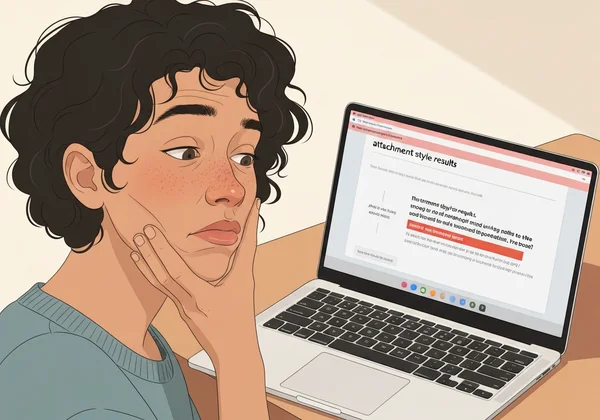
Have you ever taken an online test, read the results, and thought, "This doesn't sound like me at all?" If you recently completed an attachment style assessment and found the results confusing or inaccurate, you are not alone. It can be disheartening to seek self-understanding only to feel misunderstood by a quiz.
This guide is here to help you navigate this common experience. We'll explore why your results might not match your self-perception and what you can do about it. Understanding these factors is the first step toward gaining genuine clarity.
At AttachmentStyleQuiz.me, we believe a quiz is a starting point for discovery, not a final judgment. Our goal is to empower you with a reliable tool for self-exploration. If you're ready for a clearer picture, you can always retake the quiz with fresh insights.
Retest Attachment Style: When and How to Take the Quiz Again
Deciding to retake an attachment style quiz can be a great step toward clarity. But how do you know if it's necessary? And how can you ensure the next result is more accurate? Let’s explore when and how to approach the test for a second time.
Signs You Might Need to Retake the Attachment Style Quiz
Sometimes, the need for a retest is obvious. If you rushed through the questions or were distracted, your answers might not reflect your true feelings. Here are a few other signs that it might be a good idea to try again:
- The results feel completely wrong: The description of your supposed style (e.g., anxious, avoidant) doesn't resonate with your experiences in relationships at all.
- You were in a specific emotional state: If you took the quiz right after an argument with a partner or during a period of high stress, your answers might have been influenced by that temporary state.
- You answered based on one relationship: Your attachment patterns can show up differently with different people (like a parent versus a romantic partner). If you only thought of one person, your result might be skewed.
- The description only fits partially: You might agree with some points but find that a large portion of the profile doesn't match your behavior or feelings.
Optimal Conditions for More Accurate Attachment Style Results
To get the most accurate snapshot of your attachment patterns, the right environment and mindset are key. Think of it as creating a clear space for honest self-reflection. When you're ready to try the quiz again, find a time and place where you can be calm and focused.
Set aside about 10-15 minutes where you won't be interrupted by notifications, people, or other tasks. A quiet room is ideal. Before you begin, take a few deep breaths to clear your mind. This helps you answer from a place of general feeling rather than immediate stress. This calm state allows for more honest and thoughtful responses, leading to a result that truly reflects you.

How to Prepare Before Retaking Your Attachment Assessment
A little preparation can make a big difference. Before you start the quiz again, think about your relationships more broadly. Consider your patterns with romantic partners, close friends, and even family. Ask yourself how you generally behave when you feel close to someone or when you feel insecure.
Try not to overthink each question. Your first, intuitive response is often the most honest one. The goal is not to get a "good" score but an accurate one. Being honest with yourself is the most valuable part of the process. When you're ready for a fresh perspective, you can start your test and see what new insights you uncover.
Factors That Affect Attachment Quiz Accuracy
It’s important to remember that an online quiz is a tool, not a perfect science. Several factors can influence the outcome of your attachment assessment. Understanding them helps you interpret your results with a more nuanced and compassionate perspective.
How Life Stressors Can Skew Your Attachment Style Results
Your attachment system is designed to activate under stress. Significant life challenges, such as job loss, health issues, or family conflict, can amplify your relational needs. This happens because your attachment system activates under stress.
For example, a normally secure person might feel more anxious or needy during a period of intense uncertainty. Their answers would reflect this temporary state, potentially leading to an "anxious attachment" result that doesn't capture their baseline personality. When looking at your results, consider what's been happening in your life recently.
Why Recent Relationship Events Impact Your Attachment Assessment
Just as general life stress can affect your results, so can recent events within your relationships. Did you just have a wonderful, connecting weekend with your partner? You might answer questions with a more secure and optimistic bias. Did you have a painful conflict or feel let down? Your answers might lean more toward an anxious or avoidant style.
These events prime your mind to think in a certain way. An attachment style quiz is a snapshot in time. If that snapshot is taken during a relational high or low, it may not represent the full picture of your typical patterns.
Understanding the Limitations of Self-Report Attachment Quizzes
Self-report quizzes rely entirely on your own self-awareness. This has its limits. We all have blind spots and may not see our own behaviors as clearly as others do. Sometimes, we answer based on the person we want to be, not the person we actually are in challenging moments.
Furthermore, a quiz can't capture the full complexity of your inner world or relationship dynamics. It provides a valuable framework, but it's not a substitute for deep self-reflection or professional guidance. Our free attachment style quiz is designed to be a powerful starting point, giving you a foundation to build upon.
Understanding Results Mismatches
So, what does it mean when your results still don't feel right, even after considering outside factors? A mismatch isn't a sign of failure; it's an invitation to look deeper. Often, the reason for the disconnect is that human attachment is more complex than a single label.
Why You Might Show Traits of Multiple Attachment Styles
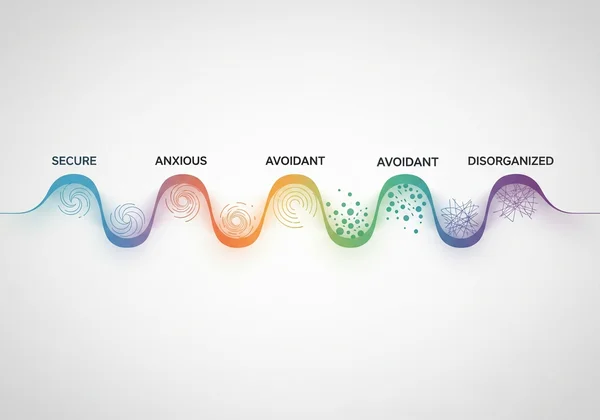
It is very common to see parts of yourself in more than one attachment style. For example, you might crave intimacy (anxious trait) but also feel the urge to pull away when things get too close (avoidant trait). This combination is often referred to as a fearful-avoidant or disorganized attachment style.
This doesn't mean the quiz is wrong. It simply means your relational strategy is more complex. You might react differently depending on the situation or the person you are with. Recognizing these mixed patterns is a powerful insight in itself.
When Attachment Styles Exist on a Spectrum, Not in Boxes
It's helpful to think of attachment styles as existing on a spectrum rather than in rigid, separate boxes. You might be "mostly secure with some anxious tendencies" or "mildly avoidant." A quiz result gives you your dominant style, but it doesn't mean you are 100% that type.
No one fits a single category perfectly. We are all unique blends of different traits and experiences. Use the result as a guide to understand your main tendencies, but don't let it become a restrictive label. Your dominant style simply points to the patterns that show up most often for you, especially under stress.
Validating Your Results with Real-World Behavior Patterns
The best way to confirm or question your quiz results is to compare them to your real-life behavior. Take some time to reflect on your past and present relationships. When you feel stressed or insecure, what is your go-to reaction?
Do you tend to seek reassurance and feel anxious if your partner needs space? That points toward an anxious style. Do you tend to shut down, withdraw, or feel suffocated by others' needs? That suggests an avoidant style. Observing your actual behavior provides the most reliable data. A tool like our optional AI report can help connect these dots by providing personalized insights based on your unique context.
Your Path to Attachment Clarity
Instead of seeing your quiz results as a final verdict, think of them as a helpful starting point—a mirror into your relationship patterns. If something doesn't quite resonate, that's okay! It's simply an invitation to explore and learn more about yourself with fresh eyes.
Keep in mind that attachment styles aren't rigid boxes. They exist on a spectrum and can shift based on stress levels, life events, and your relationships with different people. The most important takeaway is the awareness you gain through self-exploration. Understanding what affects your quiz results and knowing when to retake the assessment helps you develop a more compassionate and accurate view of your relationship patterns.
Ready to explore your attachment style with more clarity? Our assessment is based on established psychological theory and designed to provide helpful insights. Take our free Attachment Style Quiz today and begin your journey toward healthier, more fulfilling relationships.

The Takeaway
Are attachment style quizzes accurate?
The accuracy of an attachment style quiz depends on the quality of the test and your honesty while taking it. A well-designed quiz based on psychological research, like ours, can provide a very reliable indication of your dominant attachment style. However, accuracy is also influenced by your current mood and self-awareness. It's best to view the results as a strong starting point for further self-discovery.
How often should I retake an attachment style quiz?
There's no strict rule, but retaking a quiz every six months to a year can be helpful, especially if you are actively working on yourself or have experienced significant life changes. You might also want to retake it if your initial results felt off. Re-testing can help you track your progress toward a more secure attachment style.
Can my attachment style change over time?
Yes, absolutely! While our early life experiences form our initial attachment style, it is not set in stone. Through conscious effort, self-awareness, and healthier relationship experiences, you can develop a "secure-earned" attachment. This is one of the most hopeful aspects of attachment theory—change is possible. Taking an updated quiz can help you see this growth.
Why do I feel like I don't fit any attachment style perfectly?
This is a very common and normal feeling. Most people have traits from multiple styles. Attachment is a spectrum, not a set of neat boxes. You might have a primary style that shows up under stress, but you may exhibit different tendencies in different situations. Recognizing this complexity is a sign of high self-awareness.