Disorganized Attachment Style Quiz: Your Healing Roadmap to Secure Relationships
Navigating fearful-avoidant patterns can feel overwhelming. It often leads to unpredictable relationship patterns and deep-seated insecurities. Do you find yourself caught in a confusing push-pull dynamic, yearning for connection one moment and fearing intimacy the next? If this sounds familiar, you are not alone. Many people experience this internal conflict. Understanding its roots is the first step toward change.
This guide offers a clear, step-by-step roadmap to understanding and healing. It will help you move towards more secure and fulfilling relationships. The journey begins with self-awareness. Discovering your primary attachment pattern is a crucial starting point. You can begin to understand your unique needs by taking a comprehensive attachment style quiz. This article will help you transform your patterns and build the stable connections you deserve.

Understanding Fearful-Avoidant Patterns
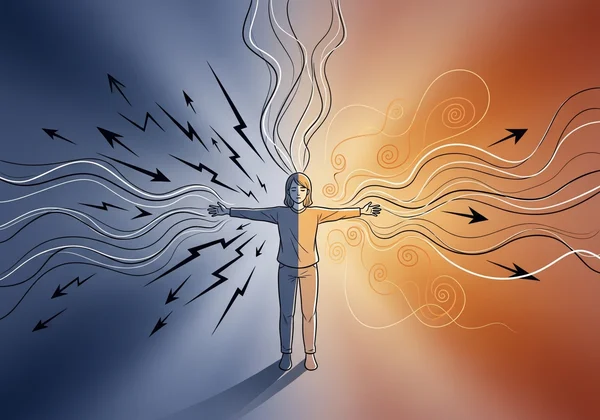
Disorganized attachment, also called fearful-avoidant attachment, is the most complex of the four main attachment styles. It's characterized by a deep, internal conflict. Individuals with this style simultaneously desire emotional intimacy and are terrified of it. This creates a confusing and often painful experience in relationships, both for them and their partners.
Instead of a consistent strategy for getting their needs met (like the anxious or avoidant styles), their approach is often contradictory. They may pull someone close, only to push them away when the connection feels too intense or threatening. This pattern is not a choice but a learned response to early life experiences.
The Fearful-Avoidant Dilemma: Craving vs. Fearing Intimacy
The core of this attachment style is a powerful dilemma. On one hand, there is a genuine and deep-seated desire for love, support, and closeness. Like anyone, they want to feel safe and connected with another person. This is the part of them that initiates relationships and seeks out affection.
On the other hand, a powerful fear runs in the opposite direction. The very closeness they crave feels dangerous. Past experiences taught them a harsh lesson: the people they rely on for safety can also cause fear or pain. So when intimacy grows, an internal alarm blares. It feels like a threat. This triggers a retreat into emotional or physical distance, sabotaging the very connection they were trying to build.
Identifying Signs of Disorganized Attachment in Your Relationships
Recognizing these patterns in your own life is the first step toward healing. While everyone's experience is unique, some common signs may resonate with you.
- Contradictory Behavior: You might send mixed signals to partners, seeking intense connection one day and becoming distant and cold the next.
- Difficulty Trusting Others: You may find it hard to believe that others have good intentions, often anticipating betrayal or abandonment.
- Negative View of Self and Others: A core belief might be that you are unworthy of love and that others are unreliable and will ultimately hurt you.
- Fear of Both Abandonment and Engulfment: You worry about your partner leaving you, but you also worry about losing yourself or being controlled in the relationship.
- Emotional Volatility: You might experience rapid and intense mood swings, especially in response to relationship stress.
- Dissociation During Conflict: When conversations become heated or emotionally charged, you might "check out," feeling numb, detached, or foggy.
If these signs feel familiar, know that they are simply strategies your nervous system developed to cope. They can be changed with awareness and effort.
Tracing the Roots: How Disorganized Attachment Develops
Understanding where these patterns come from can remove a great deal of self-blame. Disorganized attachment is not a personal failing; it is a logical adaptation to a confusing or frightening childhood environment. This pattern develops when a child’s caregiver—the person who is supposed to be a source of safety and comfort—is also a source of fear.
This creates an impossible situation for a child. Children naturally seek comfort from caregivers when scared. But what if the caregiver causes the fear? The child feels trapped. Do they run toward safety or flee the threat? This unresolved paradox forms the foundation of the disorganized attachment style.
The Impact of Early Childhood Trauma and Inconsistency
The development of this attachment style is strongly linked to unresolved trauma in the caregiver or the child. This doesn't always mean overt abuse, though it certainly can. It can also stem from more subtle situations:
- A caregiver who struggled with their own unresolved trauma and had frightening or unpredictable emotional outbursts.
- A parent who was loving at times but also neglectful or emotionally unavailable at other times.
- Situations of loss, chaos, or significant instability in the home environment.
In these scenarios, the child learns that relationships are unpredictable and potentially dangerous. Their internal "blueprint" for connection becomes scrambled, leading to the push-pull dynamics seen in adulthood.
Breaking the Cycle: From Childhood Wounds to Adult Patterns
Childhood patterns don't vanish. They shape how you connect as an adult—especially in romance. Old fears get projected onto new partners. The desire for connection remains, but the old fear keeps getting in the way.
The good news is that you are no longer a helpless child. As an adult, you have the power to recognize these patterns and make new choices. Breaking the cycle begins with understanding how your past influences your present. A great way to begin mapping these patterns is to take our attachment style quiz and gain clarity on your specific tendencies. This awareness is the key that unlocks the door to healing.
Practical Steps for Disorganized Attachment Recovery
Healing these patterns is a journey of building safety within yourself and in your relationships. It requires patience, compassion, and consistent effort. The goal is to move towards "earned security," where you consciously build the secure foundation you may not have received in childhood. These practical steps can serve as your guide.
Cultivating Self-Awareness and Emotional Regulation
The first phase of recovery involves turning inward. Because this style is rooted in internal chaos, creating internal calm and predictability is essential.
-
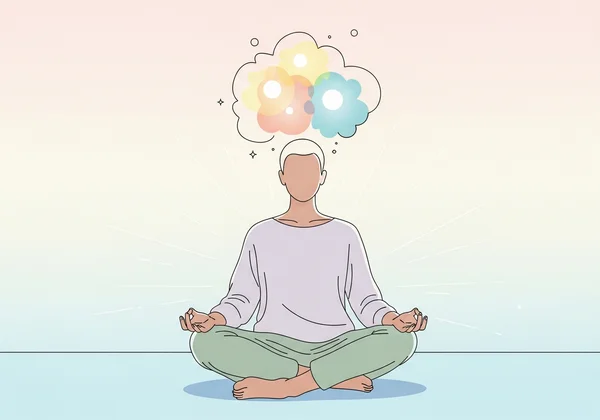
Practice Mindfulness: Mindfulness teaches you to observe your thoughts and feelings without judgment. Simple practices like focusing on your breath for a few minutes each day can help you stay grounded when intense emotions arise.
-
Name Your Feelings: Instead of being overwhelmed by a wave of emotion, practice pausing and identifying it. Simply saying to yourself, "I am feeling fear right now" or "This is anxiety" can reduce its power.
-
Identify Your Triggers: Start noticing what situations, words, or behaviors cause you to feel threatened and want to pull away. Journaling can be a powerful tool for tracking these patterns over time.
Learning to Trust: Building Secure Connections with Others
Learning to trust is a gradual process. It’s about teaching your nervous system that connection can be safe. This doesn't mean trusting everyone blindly. It means learning to discern who is trustworthy and building connections slowly and intentionally.
Start with "low-stakes" relationships, perhaps with a trusted friend or therapist. Practice sharing small vulnerabilities and see how they respond. Over time, these positive experiences create new neural pathways, proving that safe connection is possible. The journey of building trust is unique to you, and understanding your starting point through an attachment style quiz can provide a personalized map for the road ahead.
Overcoming Fearful Avoidance & Building Secure Attachment
As you build internal safety and begin to trust others, you can start implementing strategies to create healthier relationship dynamics. This phase is about translating your inner work into outward action. The goal is to overcome fearful-avoidant patterns and actively build the secure attachment you desire.
Setting Healthy Boundaries and Communicating Needs Clearly
Boundaries are essential for anyone with this attachment style because they create safety and predictability. A boundary is not a wall to keep people out; it's a clear guideline that tells others how to treat you respectfully.
Start by identifying your needs. Do you need space after an argument? Do you need your partner to speak to you in a calmer tone? Practice communicating these needs simply and directly, using "I" statements. For example, "I feel overwhelmed when we discuss this right now. I need to take 20 minutes to calm down." Clear communication is a cornerstone of secure relationships.
When to Seek Professional Support: Therapy and Coaching
While self-help strategies are powerful, healing the deep wounds associated with disorganized attachment often requires professional support. A therapist specializing in attachment theory or trauma can provide a safe, stable relationship in which to explore your past and practice new ways of relating.
Therapy can help you process underlying trauma, develop emotional regulation skills, and challenge negative core beliefs. Remember, seeking help is a sign of strength. A tool like an online quiz is an excellent first step for self-discovery, but it is not a substitute for professional diagnosis or therapy.
Your Journey to Secure Connection Starts Now
Healing disorganized patterns isn't about wiping the slate clean—it's about crafting the steady relationships you crave. You've learned that these patterns have roots, that they manifest in specific ways, and most importantly, that you have the power to change them.
The path involves cultivating self-awareness, learning to regulate your emotions, and bravely building trust with safe people. Every small step you take to understand yourself and communicate your needs is a victory. This roadmap offers guidance, but your unique journey starts with a single, clear step: understanding exactly where you stand today.
Your path to building the secure, loving relationships you deserve begins with insight. Take the first step by discovering your attachment style with our free, insightful attachment style quiz.
Frequently Asked Questions About Disorganized Attachment
Can I be both anxious and avoidant?
Yes, this is the very essence of the disorganized (or fearful-avoidant) attachment style. It mixes anxious traits (craving connection, fearing abandonment) with avoidant ones (fearing intimacy, wanting space). That's the push-pull.
How to heal an anxious/avoidant attachment style?
Healing the patterns of disorganized attachment is a multi-step process focused on building internal safety. It involves cultivating self-awareness to recognize your triggers, practicing emotional regulation techniques like mindfulness, learning to set healthy boundaries, and slowly building trust in safe relationships. For many, working with a therapist who specializes in attachment is a key part of the journey to earned security.
What are the 4 types of attachment styles?
The four main attachment styles are:
- Secure: Comfortable with intimacy and autonomy, trusting, and resilient.
- Anxious (or Preoccupied): Craves closeness, often worries about their partner's love, and fears abandonment.
- Avoidant (or Dismissive): Highly independent, uncomfortable with emotional closeness, and prefers to suppress feelings.
- Disorganized (or Fearful-Avoidant): A combination of anxious and avoidant traits, desiring intimacy but also fearing it.
What's the healthiest attachment style?
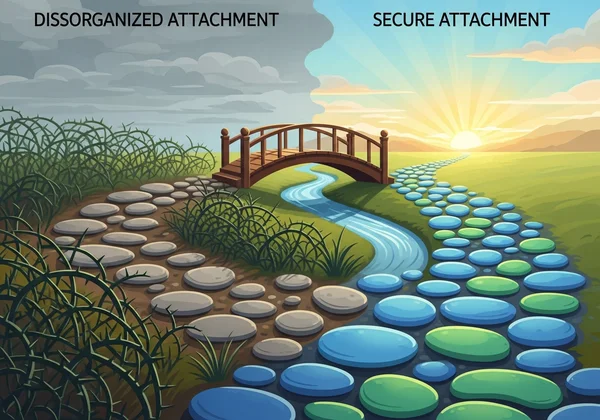
The healthiest attachment style is Secure Attachment. Individuals with a secure attachment style tend to have a positive view of themselves and others. They are comfortable with emotional intimacy, can depend on others without becoming codependent, and don't worry excessively about being alone or rejected. They are resilient and can manage their emotions well. The goal of healing is to develop the characteristics of a secure attachment, a state known as "earned security." To find out where you fall on this spectrum, you can see your results today.