Self-Care for Each Attachment Style: Personalized Healing Practices
Have you ever tried self-care techniques that work wonders for your friends but leave you feeling even more drained? You’re alone. The secret to effective self-care might not be in the activity itself but in how it aligns with your unique emotional needs, which are often shaped by your attachment style.
Understanding how you connect with others is the first step toward understanding how to care for yourself. What if your self-care could be tailored specifically to your relationship patterns? This guide offers personalized strategies for each attachment style, helping you move beyond generic advice. You'll learn daily routines, emotional regulation techniques, and boundary-setting skills that truly resonate. If you're unsure about your type, our free attachment style quiz can provide the clarity you need to begin.
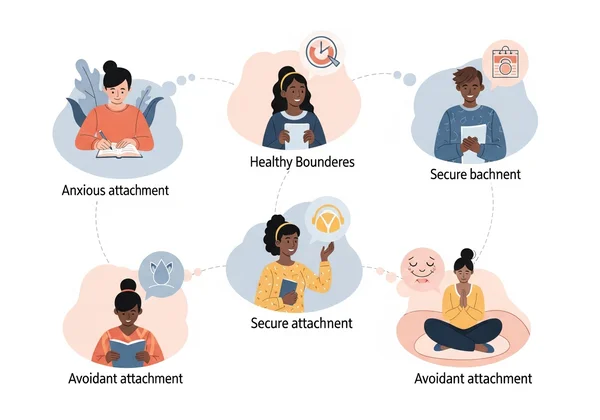
Understanding Attachment Styles and Self-Care Needs
Your attachment style develops in early childhood and serves as your internal blueprint. It guides how you navigate relationships and manage stress throughout your life. It influences how you seek comfort, express needs, and soothe yourself. This is why a one-size-fits-all approach to self-care often falls short. What calms an anxious mind might feel isolating to an avoidant one. Let's explore why personalization is key.
Why Generic Self-Care Often Fails for Your Attachment Style
Standard self-care advice—like taking a bubble bath or practicing mindfulness—assumes everyone self-soothes in the same way. However, our brains are wired differently based on our attachment history. Early patterns shape our adult capacity for regulating emotions. What feels restorative to a secure person might trigger anxiety or a sense of disconnection in someone with an insecure attachment style.
Consider Sarah's story. She struggled with anxious attachment and felt constantly overwhelmed. Friends told her to meditate, but sitting alone with her thoughts only amplified her worries. It wasn't until she discovered self-care practices specifically for anxious attachment—like grounding exercises and co-regulation activities—that she finally found relief. Her experience shows that effective self-care must address the root of our emotional patterns.
The Self-Care Spectrum: From Survival to Growth
Attachment-based self-care isn't just about feeling better in the moment; it's a journey. We can think of it as a spectrum with three levels: emergency regulation, daily maintenance, and long-term growth. Emergency care helps manage intense distress. Maintenance involves daily habits that keep you stable. Growth focuses on building a more secure sense of self.
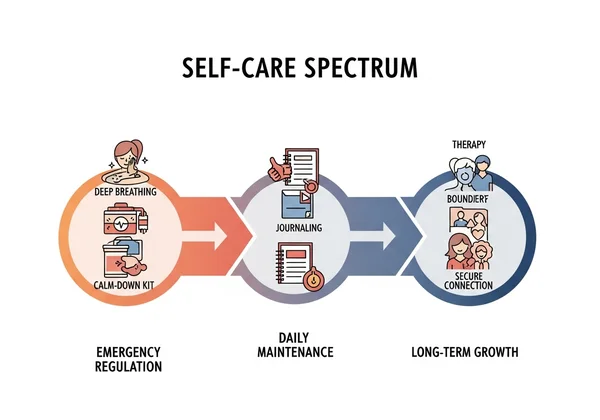
How do you know if your current approach is working? Positive signs include feeling more emotionally balanced, having healthier relationships, and responding to stress with greater resilience. If you often feel depleted or stuck in the same emotional cycles, it may be time to reassess. Finding out where you are on this spectrum is a crucial step toward personalized healing.
Self-Care Strategies for Secure Attachment
Having a secure attachment style is a fantastic foundation for healthy relationships and emotional well-being. Self-care for secure individuals is less about healing past wounds and more about reinforcing your strengths and continuing to grow. It involves maintaining your emotional resilience and deepening your connections with yourself and others.
Daily Routines That Reinforce Your Secure Foundation
Consistency is key to maintaining your secure base. Start your mornings with a simple practice like journaling three things you're grateful for to build emotional resilience. In the evenings, take a few minutes to reflect on your day, acknowledging both your successes and challenges without judgment. Weekend activities that strengthen secure behaviors could include hosting a small gathering with friends or spending quality time with a loved one, reinforcing your natural ability for healthy connection.
Advanced Self-Care for Secure Attachment: Growth Through Connection
Even with a secure foundation, there is always room for growth. Advanced self-care involves practicing healthy boundary maintenance—knowing when to say yes and when to say no to protect your energy. Self-compassion exercises, such as treating yourself with the same kindness you would offer a friend during a tough time, can deepen your inner security. You can also focus on community building, using your secure attachment to create safe and supportive spaces for others.
Self-Care Strategies for Anxious Attachment
If you have an anxious attachment style, you might often feel a deep need for closeness and reassurance. Your self-care journey is about building internal safety and learning to self-soothe, reducing your reliance on external validation to feel okay. The right strategies can help you manage anxiety and cultivate a stronger sense of self-worth.
Emergency Self-Care for Anxiety Spirals
When you feel overwhelmed by anxiety, you need immediate, effective tools. Grounding techniques are incredibly helpful. Try the 5-4-3-2-1 method: name five things you can see, four things you can touch, three things you can hear, two things you can smell, and one thing you can taste. This pulls your focus back to the present moment. It's also wise to create a "calm-down kit" with items that soothe your senses, like a soft blanket, a calming essential oil, or a favorite tea.
Daily Habits to Reduce Anxiety and Build Security
Building a foundation of internal security requires consistent daily effort. Start your morning with a routine that reinforces your self-worth, such as reciting positive affirmations or doing a short, guided meditation focused on self-love. Journaling is a powerful tool; use prompts to challenge anxious thoughts, asking yourself, "What is a more compassionate way to see this situation?" In the evening, practice mindfulness to process the day's emotions without letting them spiral.
Boundary-Setting for Anxious Attachment
Setting boundaries can be challenging when you fear rejection, but it's essential for your well-being. Start by learning an assertiveness framework that feels comfortable. A simple script like, "I need [your need] because [the reason]. Can we [suggest a solution]?" can be very effective. Practice saying "no" to small requests first to build your confidence. Learning to communicate your needs clearly and calmly will strengthen your relationships and your sense of self.
Self-Care Strategies for Avoidant Attachment
For those with an avoidant attachment style, intimacy and emotional expression can feel threatening. Your self-care focus is on gently creating emotional safety and learning to connect with your feelings without becoming overwhelmed. The goal is to build tolerance for vulnerability at a pace that feels manageable for you.
Creating Emotional Safety for Avoidant Types
The first step is to create a sense of safety within yourself. Start by identifying your emotional triggers—the situations or feelings that make you want to withdraw. Create personal sanctuaries, quiet spaces at home or work where you can retreat and recharge without feeling pressured. Approach emotional self-care gradually. Instead of diving deep, try simply naming your feeling ("I feel frustrated") without needing to analyze it further.
Mindfulness Practices for Avoidant Attachment
Mindfulness can help you connect with your body and emotions in a non-threatening way. Body scan meditations are particularly useful, as they encourage you to notice physical sensations without intellectualizing them. If traditional meditation feels too intense, try non-verbal mindfulness like focusing on the rhythm of your steps while walking or paying close attention to the sensations of washing dishes. A powerful practice is the "pause before retreat" meditation: when you feel the urge to pull away, take three deep breaths before you act.

Building Connection While Respecting Independence
You can build meaningful connections without sacrificing your need for independence. Try scheduling connection time with loved ones. This makes social interaction feel predictable and less overwhelming, allowing for quality over quantity. Find self-soothing activities that don't lead to complete isolation, such as reading in a coffee shop or going for a walk in a park. This allows you to be around people without the pressure of direct interaction.
Self-Care Strategies for Disorganized Attachment
A disorganized (or fearful-avoidant) attachment style involves a conflicting desire for and fear of intimacy. Self-care is about finding stability and learning to integrate these opposing parts of yourself. The journey involves creating predictability, building self-trust, and gently healing past traumas through safe and consistent practices.
Stabilizing Practices for Emotional Dysregulation
When your emotions feel chaotic, structure is your anchor. Create a predictable daily routine for meals, work, and sleep to provide a sense of stability. Develop a "safety zone" technique for overwhelming moments; this could be a specific chair in your home where you practice deep breathing or listen to calming music. Physical self-care, like regular exercise or stretching, can also serve as a powerful emotional anchor, grounding you in your body when your mind feels turbulent.
The Dual Approach: Self-Soothing and Self-Challenging
Living with disorganized attachment requires a delicate balance. You need to know when to comfort yourself and when to gently challenge your fears. Building trust in your own decisions is key. Use a "check-in and check-out" method: before making a decision, check in with your feelings. Afterward, check out by reflecting on the outcome without judgment. This practice helps you learn to rely on your own internal wisdom.
Healing Activities for Disorganized Attachment
Healing involves finding safe ways to process complex emotions. Creative expression, such as painting, writing, or playing music, can be a powerful outlet. "Inner child" connection exercises, where you write letters to your younger self offering comfort and validation, can be deeply healing. Most importantly, focus on safe relationship practices. This means choosing to spend time with people who are reliable, consistent, and respectful of your boundaries. If you haven't already, discovering your patterns with an attachment style test can provide a roadmap for this healing journey.

Your Personalized Self-Care Journey
Through this exploration, you've seen why self-care isn't one-size-fits-all. Your attachment style creates unique emotional needs, and when you tailor practices to these patterns—whether you lean anxious, avoidant, disorganized, or secure—you unlock real, lasting well-being. The journey is about self-compassion and experimenting to find what truly nurtures you.
Remember, your attachment style is not a fixed label but a flexible pattern that can evolve. With consistent, personalized self-care, you can build a more secure and fulfilling relationship with yourself and others.
The first and most powerful step is self-awareness. If you’re ready to stop guessing and start understanding your unique needs, take our free Attachment Style Quiz today. It’s a simple, insightful tool designed to help you begin your personalized journey toward healing and growth.
Attachment Style Self-Care Questions
Can self-care practices change my attachment style?
Yes, they can contribute significantly. Consistent, attachment-aware self-care can help create new, healthier neural pathways in your brain. This process can lead to "earned secure" attachment, where individuals who started with an insecure style develop the characteristics of a secure one through conscious effort, healing experiences, and self-awareness.
What if I don't fit perfectly into one attachment style?
It's very common not to fit neatly into one box. Attachment exists on a spectrum, and many people have a primary style with traits of another. If this is you, try a hybrid approach. Use the strategies for your primary style most of the time, but borrow techniques from other styles when you recognize those specific patterns emerging. The goal is to find what works for you, not to fit a perfect label.
How do I know if my self-care strategies are working?
You can track your progress by noticing changes in your emotional and behavioral patterns. Key indicators include feeling less reactive to stress, communicating your needs more effectively in relationships, and feeling a greater sense of inner calm and self-acceptance. Keeping a simple journal to note your feelings and responses can help you see your progress over time. Knowing your baseline from a reliable attachment style test can also help you measure your growth.
Are there self-care strategies I should avoid based on my attachment style?
Absolutely. Generic advice can sometimes backfire. For example, someone with an anxious attachment style might find that too much unstructured alone time (often suggested as self-care) increases their anxiety. Similarly, an avoidant person might use "solo self-care" as a way to reinforce isolation. The key is to be mindful of whether a practice is helping you grow or simply enabling your old, unhelpful patterns.